RSS

Unwelcome Guest (Room)

Our renovation plans originally called for leaving the guest bedroom at the front of the house intact, and simply having new window and door casings installed and having it painted. As seen in the the “Apex of Destruction” post, keeping the room intact was not feasible because a glulam needed to be installed slightly north of the room’s south wall. We then learned during second floor interior framing that “having it painted” was more complicated than we thought, as well.

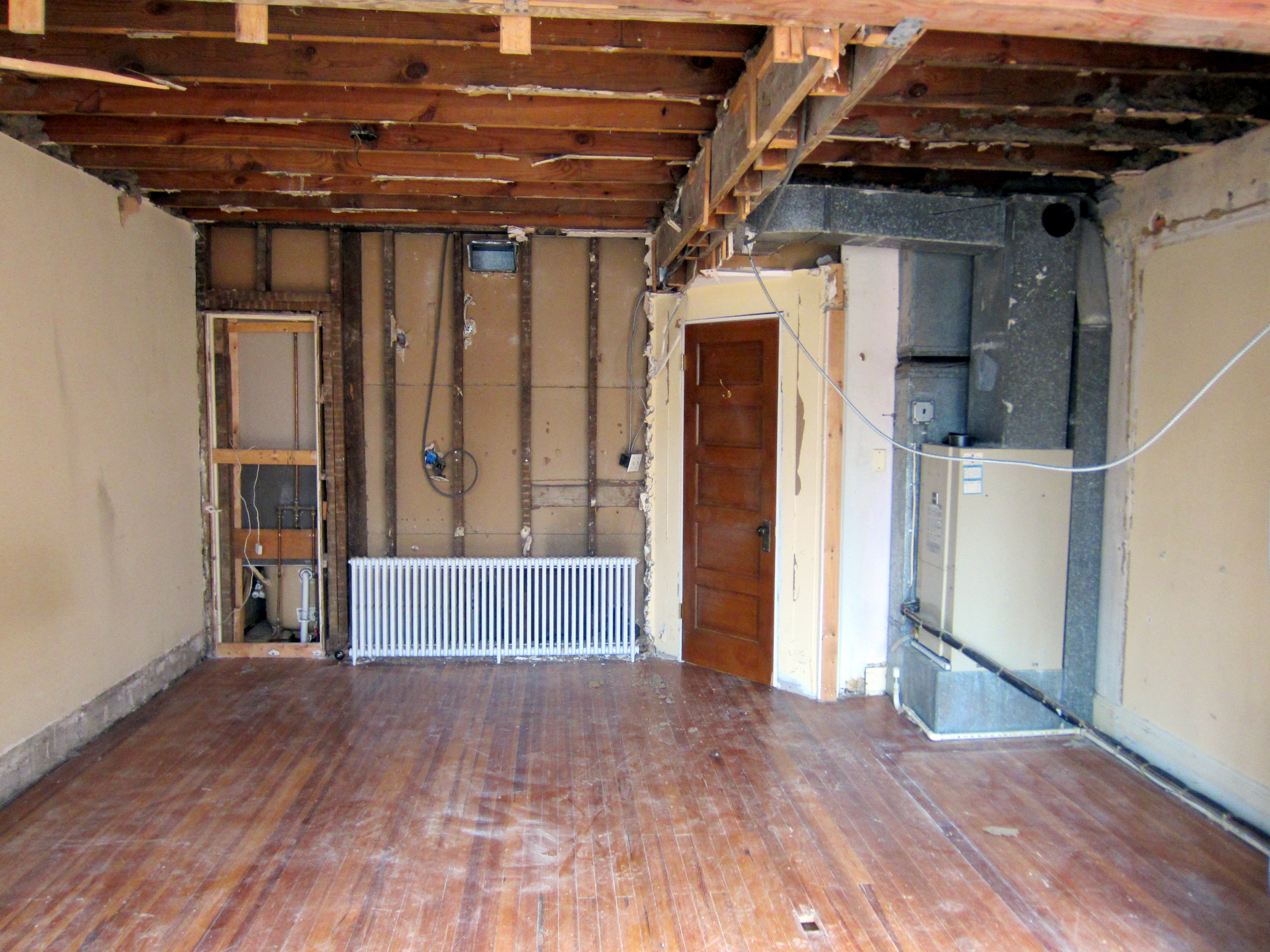
Here’s the guest room before:

When the radiator was removed (to be chemically stripped, repainted, and reinstalled in the same place), we learned that the north wall was not as it seemed:
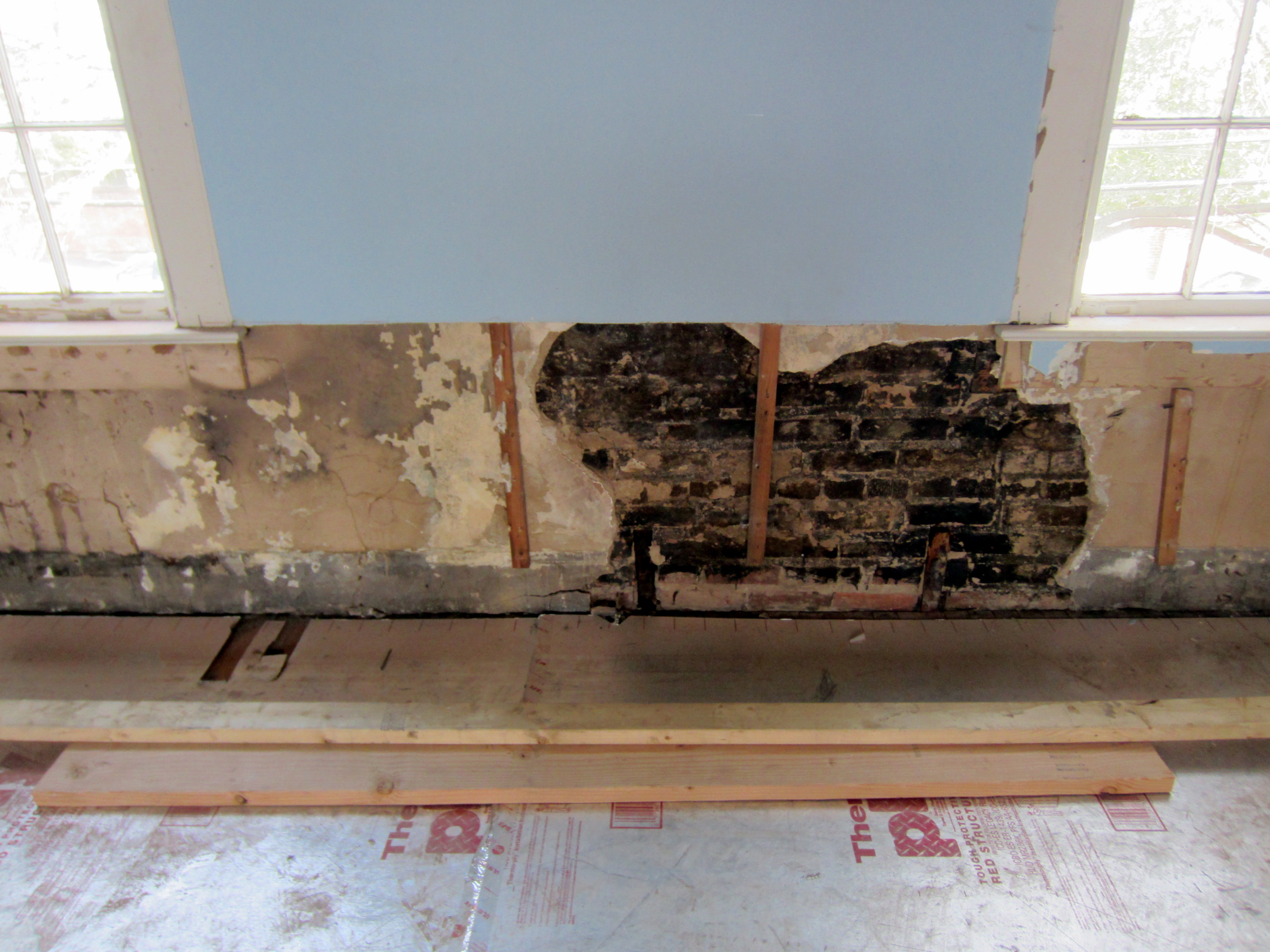
Instead of plaster-on-brick, some time in the past, someone added furring to the brick wall and installed dry wall. Because the radiator wasn’t removed the drywall under the left window was just dropped back there; it wasn’t actually attached to anything.

We’ll definitely be removing all of the existing drywall and furring. We’re now debating whether to replaster the room, or simply install drywall correctly. Since drywalling and plastering won’t occur for a while, we’re putting off this decision and focusing on other, emerging issues, like, “why not remove the entire linen closet and open up the stairwell space?”

The photo below shows the east side of the guest room; the linen closet (or, what’s left of it) is to the right:
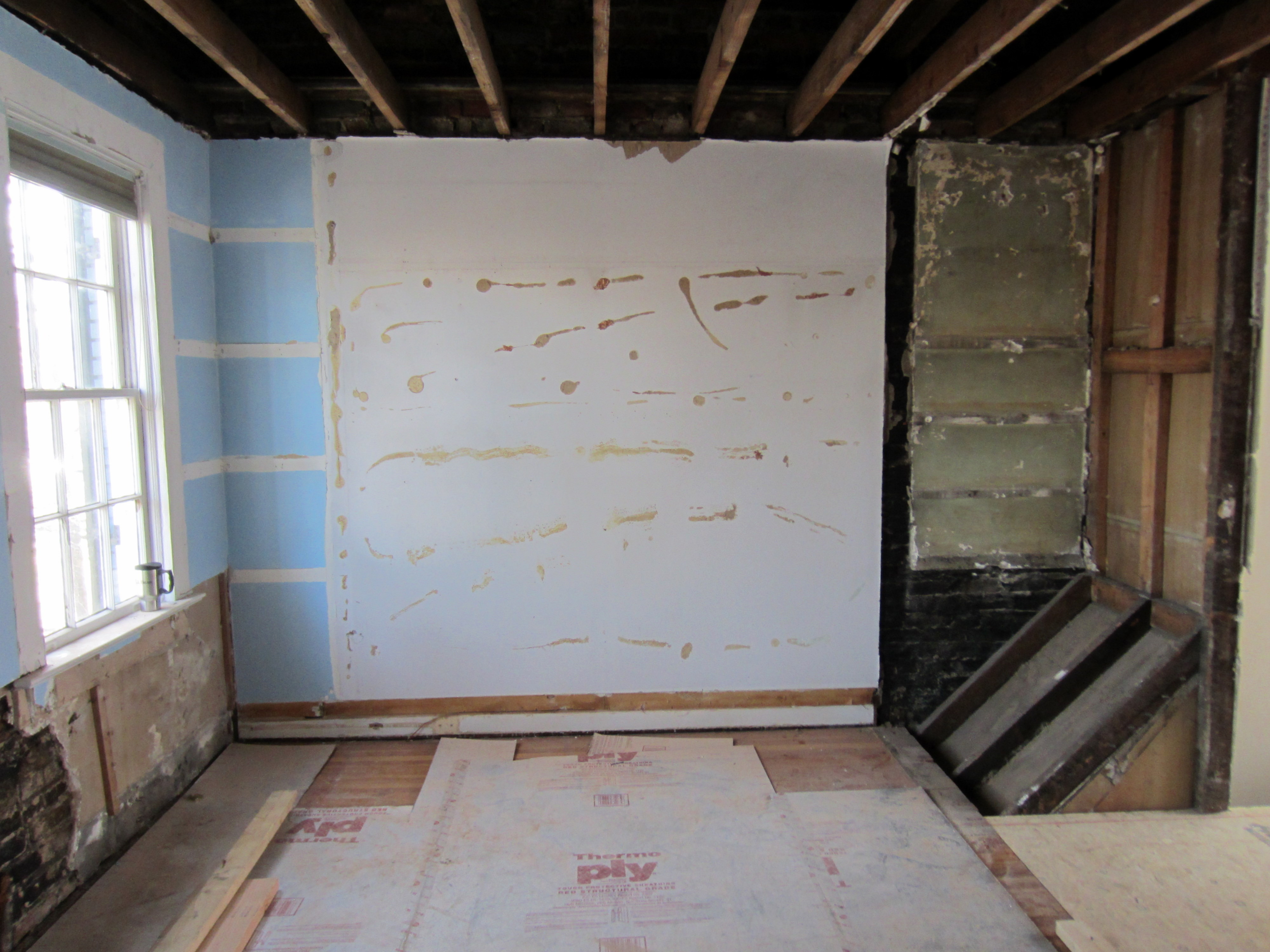
The south wall of the closet forms the stairwell ceiling:

In reviewing interior framing last weekend, Natalie, our new architect, considered this space with a fresh perspective. If the linen closet was not critical, why not remove this entire structure and install a big-ass skylight over the stairwell to open up the space and allow more light to flow into the first floor?

This would also change the second floor hallway. Previously, it looked like this, facing the guest room door:

If we act on the suggestion, the little hallway here would be opened up, and a railing would run from the old newel post location to the guest room wall; the linen closet structure would be eliminated altogether.

The only problem? We’d lose the narrowest 5-panel door in the world . . .

 
Leave a comment

Posted by on March 17, 2012 in Interior Demolition


Slab Happy

A fundamental benefit of the renovation was bumping out the back of the house. In the basement, this meant more than doubling the size of the unfinished area. One member of the family whistfully believes this will provide lots of additional storage space (the other knows with confidence that it simply provides additional acreage to house more bikes and a proper bike repair area; oh – and a second refrigerator, of course, to hold a keg for the upstairs tap).

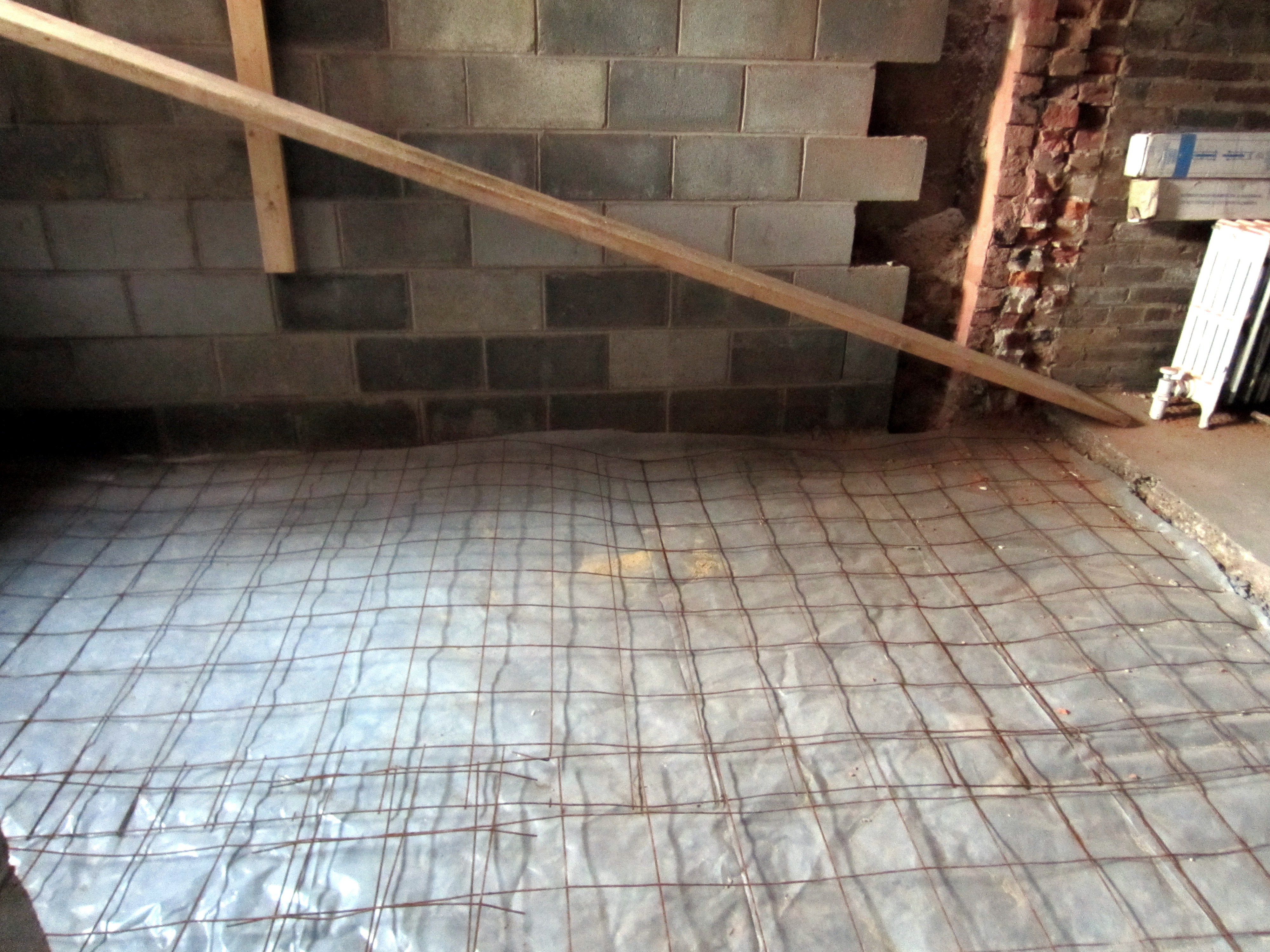
Below is a view of the area prepped for the slab to be poured. The concrete area at the top is the original house slab – it ended at the brick, south wall that was demolished in the “Excavation Day 5” post. Beyond this was the crawlspace under the old, built-over porch, then the back yard, which we’ve now pushed out into.

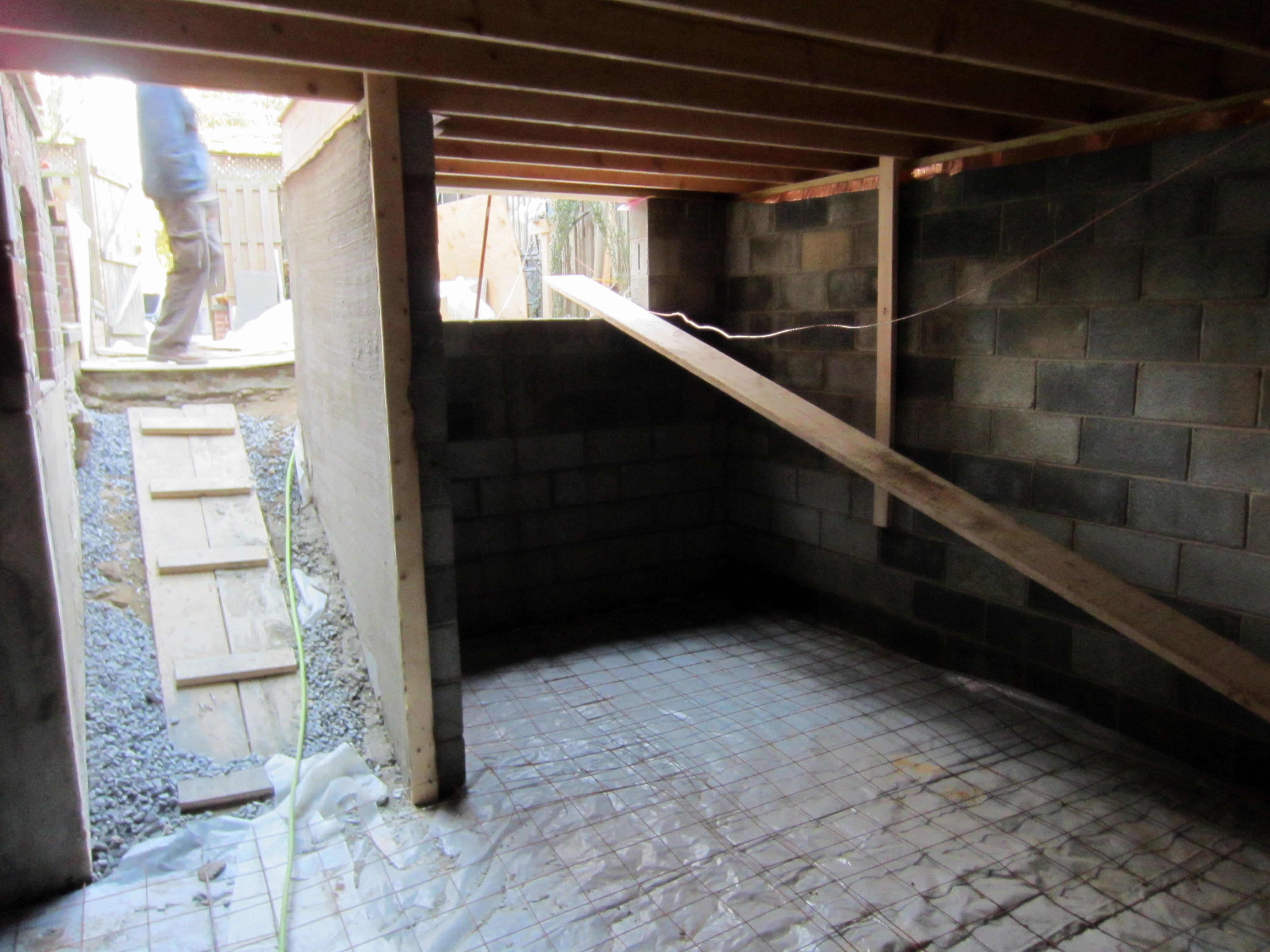
View to the west. The block wall has not been finished at this point due to an, um, revealed condition relating to the property line. The slab itself depended on resolution of this issue before it could be poured. More on this in a future post.

The walkway we’ve been using until now – it’s been like walking from a dock to a boat for the last several weeks.

Framing for the new basement stairs has now been added.

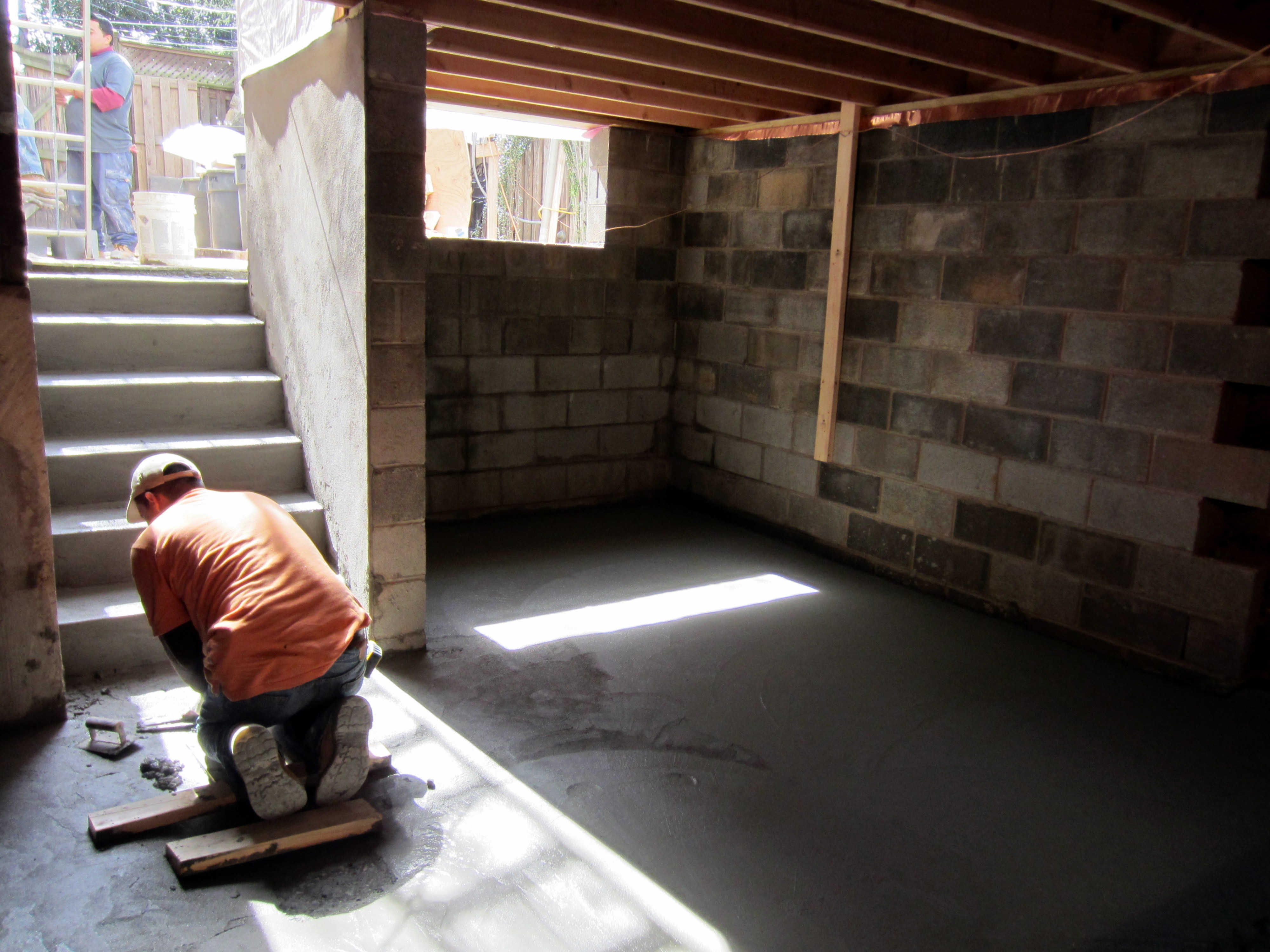
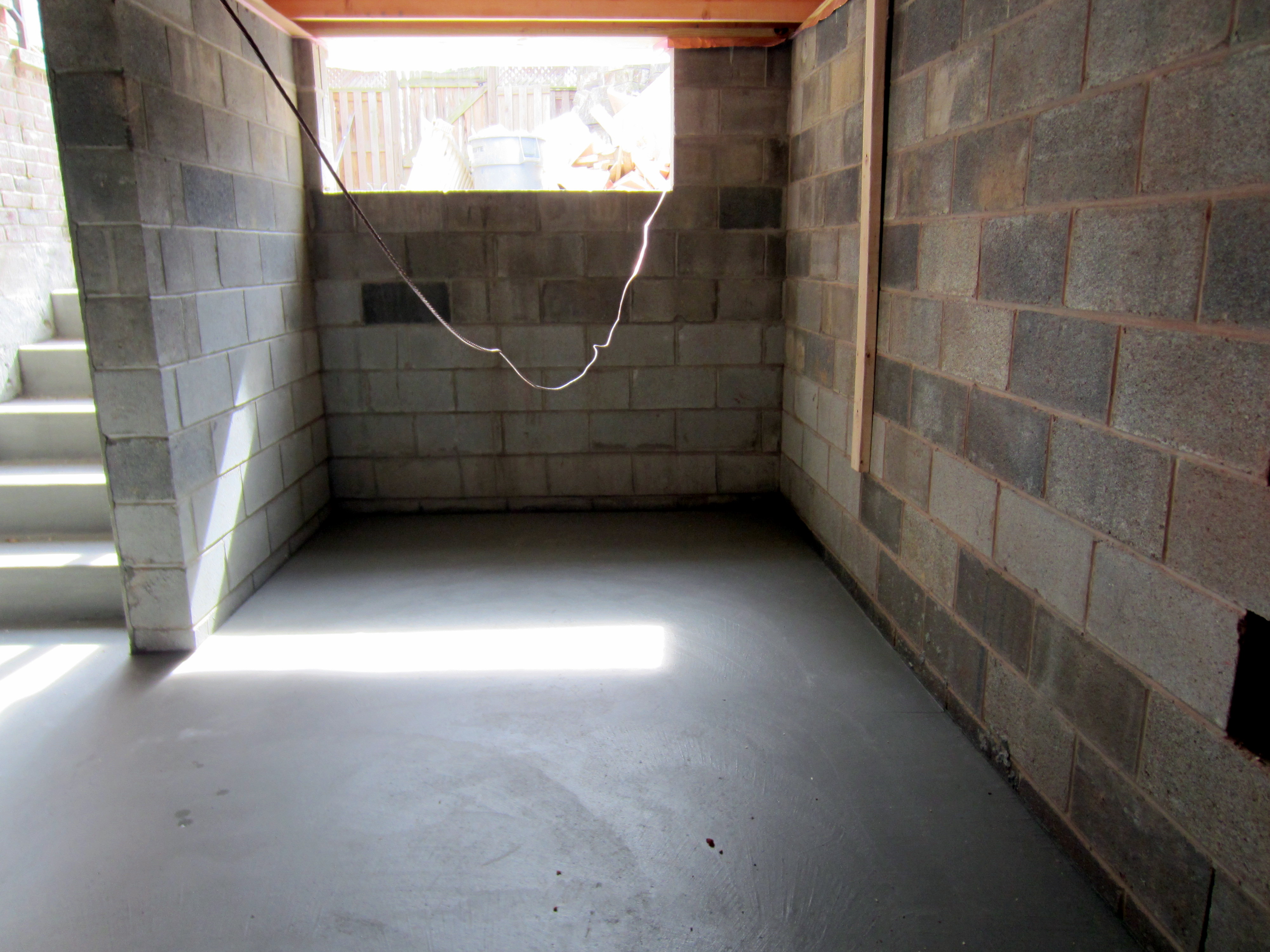
The slab and stairs have now been poured. The mason’s doing a key job in our basement. The drain used to be outside the house, under the original porch. Now it’s inside. Although the full bumpout on the top floor (which hangs over the kitchen door and basement stairs) will minimize the rain that hits the stairs and rolls down, some will still go down the stairs and get into the basement. The mason is grading the slab near the door to create a channel to direct this infiltration to the drain.

Finishing off the steps:

The freshly poured end result, looking south into what used to be the crawlspace under the old porch (up to the wall to the left) and backyard (essentially the length of that wall):

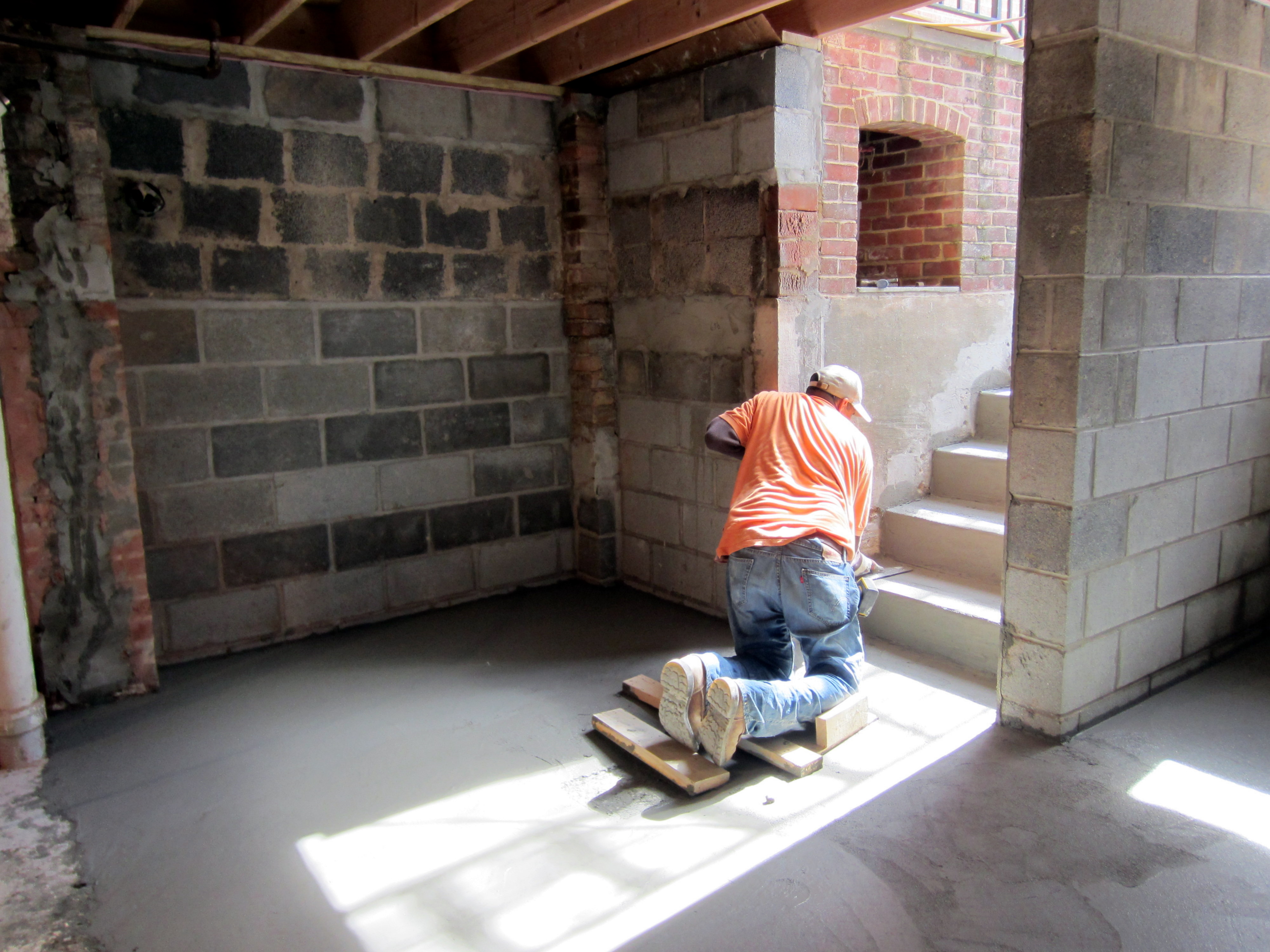
And to the east. The boiler for the hydronics and the hot-water heater will live here, consolidating the mechanical components to one corner and freeing up the rest of the basement for, um, storage (more bikes).

You can totally see where the Harry Homeowner blocks from a couple of decades ago are (ugly, but sound), and where the guys have installed new blocks as part of the renovation.

 
1 Comment

Posted by on March 15, 2012 in Excavation and Basement Work


We’ve Been Framed!

As indicated in a previous post, demolition was completed in late February. This was the demoralizing valley floor in the topography of our renovation. We’re now climbing up the mountain of improvements, starting with the framing. Since the back of our house historically has been a veritable car wreck, structurally, it was great to have the old porch structure replaced with proper joists tied into the original house framing.

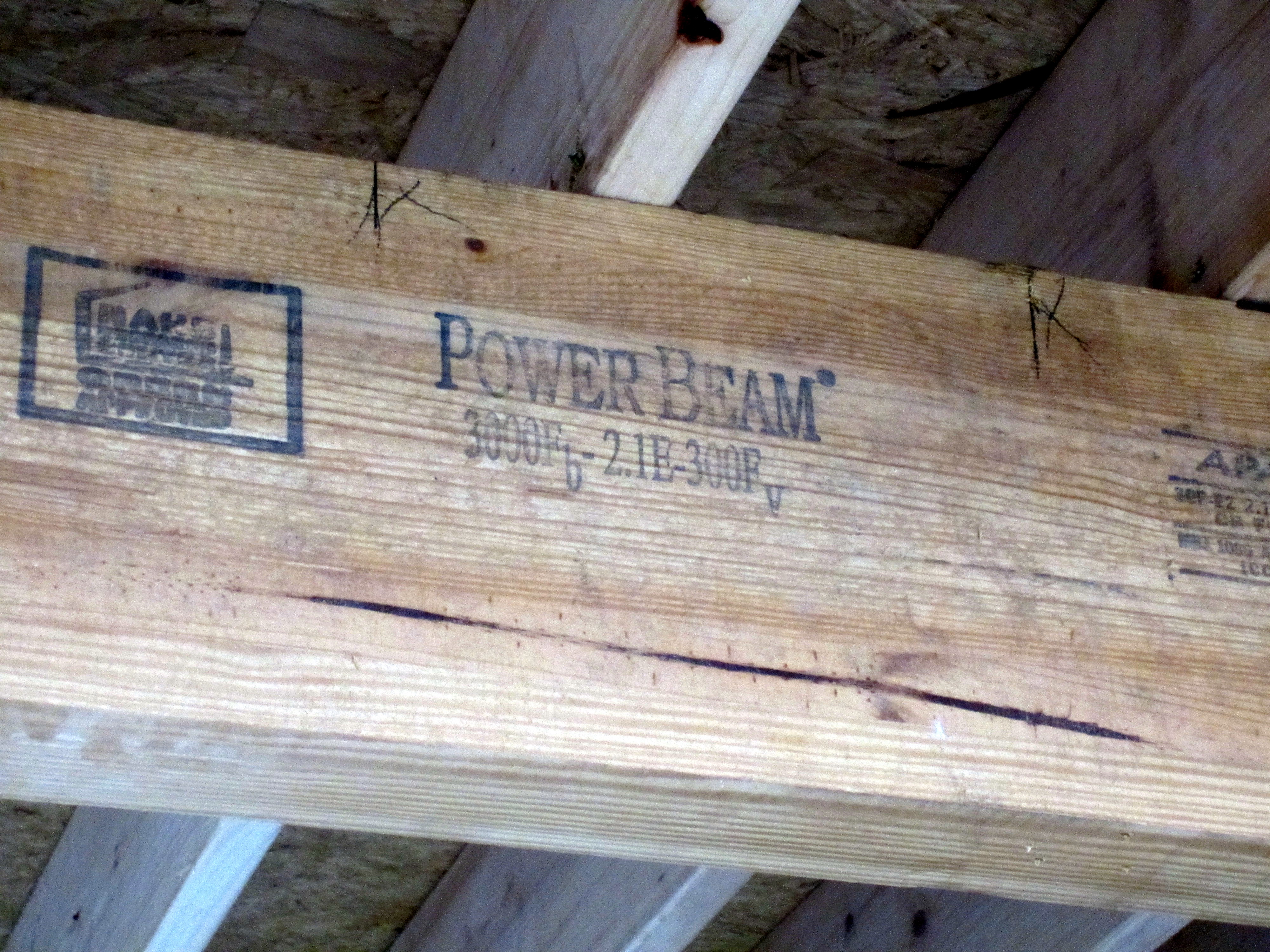
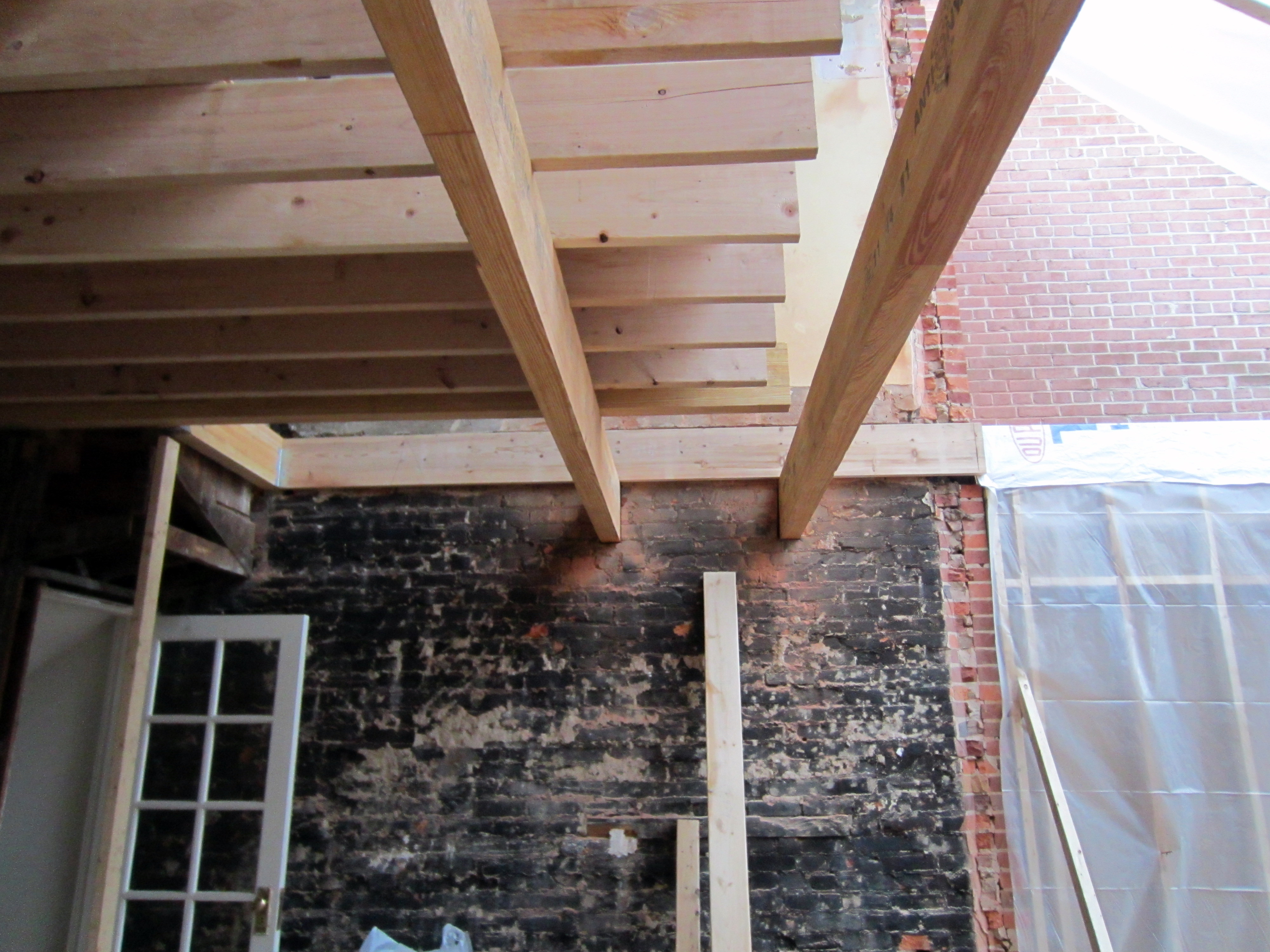
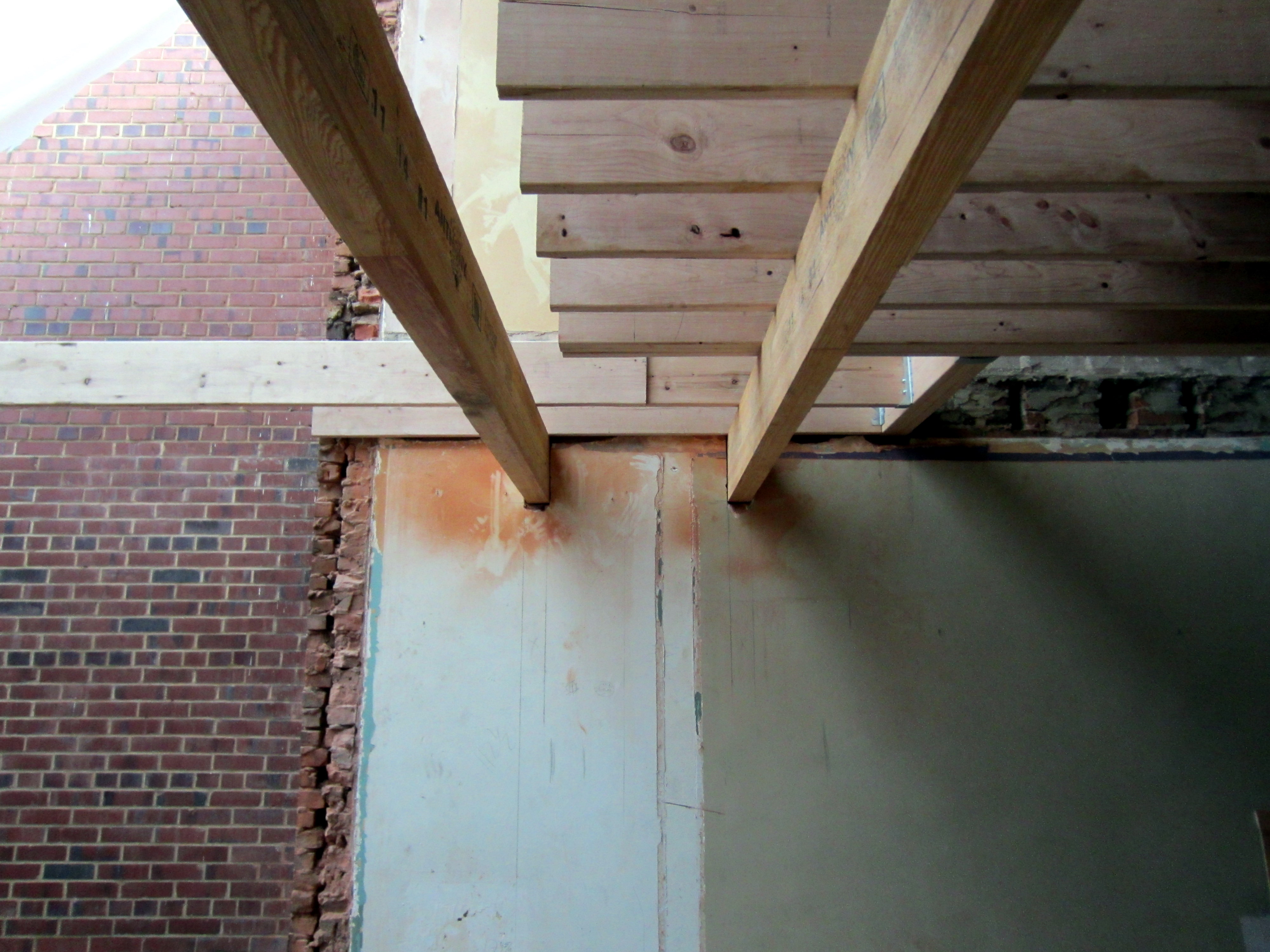
To support the new, north-south joists for the second floor, several large, glulam beams were installed. Two of them will become the bulkhead over the kitchen/dining peninsula, and will support the south end of the longest stretch of the new, north-south joists.

That’s right – POWER Beam. (Sure, it’s just a brand of laminated structural beam, but when you say it like a Monster Truck event announcer, the whole house seems cool – “POWER POWER POWER Beam!”)

Although the new joists will run parallel to the house walls, the bulkhead glulams supporting them are slotted straight into the brick like the old joists (only lower and larger). We’re oddly happy about this, simply because we thought the old-school joists-in-slots technique was so cool.

Two of the other glulam beams (POWER Beams!) are installed behind an original double beam to the north and next to the staircase to the east.

Holy crap! The house is starting to look like a Mondrian painting:

It’s a glulampalooza:

The second bulkhead mother gets installed. From a design perspective, the bulkhead will define the transition from the living room to the kitchen; from a functional perspective, it will handle routing of vents, plumbing, and hydronics.

The new, second-floor joists installed. During the last meeting with the architects and GC, we collectively decided to install 10″ joists instead of the unusual (for a modern floor) 8″ joists we had spec’d. The reason we spec’d the narrower joists was to be maintain consistency with the existing joists at the front of the house, which were approximately 8″, as far as we could tell, and to maximize ceiling height. When the plaster ceiling was removed, thought, we realized that it was much thicker than the drywall that will replace it, so we’d only loose a fraction of an inch in ceiling height, while gaining significant structural stability on the second floor.

Although most of the joists are 2 x 10s, the showers in the two upstairs bathrooms will be curbless, and have drains that require some clearance, so we’ll be installing 2 x 8s in this area to help with the tile angles.

View to the east of the new bulkhead framing.

New subfloors begin to go in.

Another angle of the bulkhead framing.

Subfloor installation complete for the original house section.

New framing where the old sleeping porch used to be:

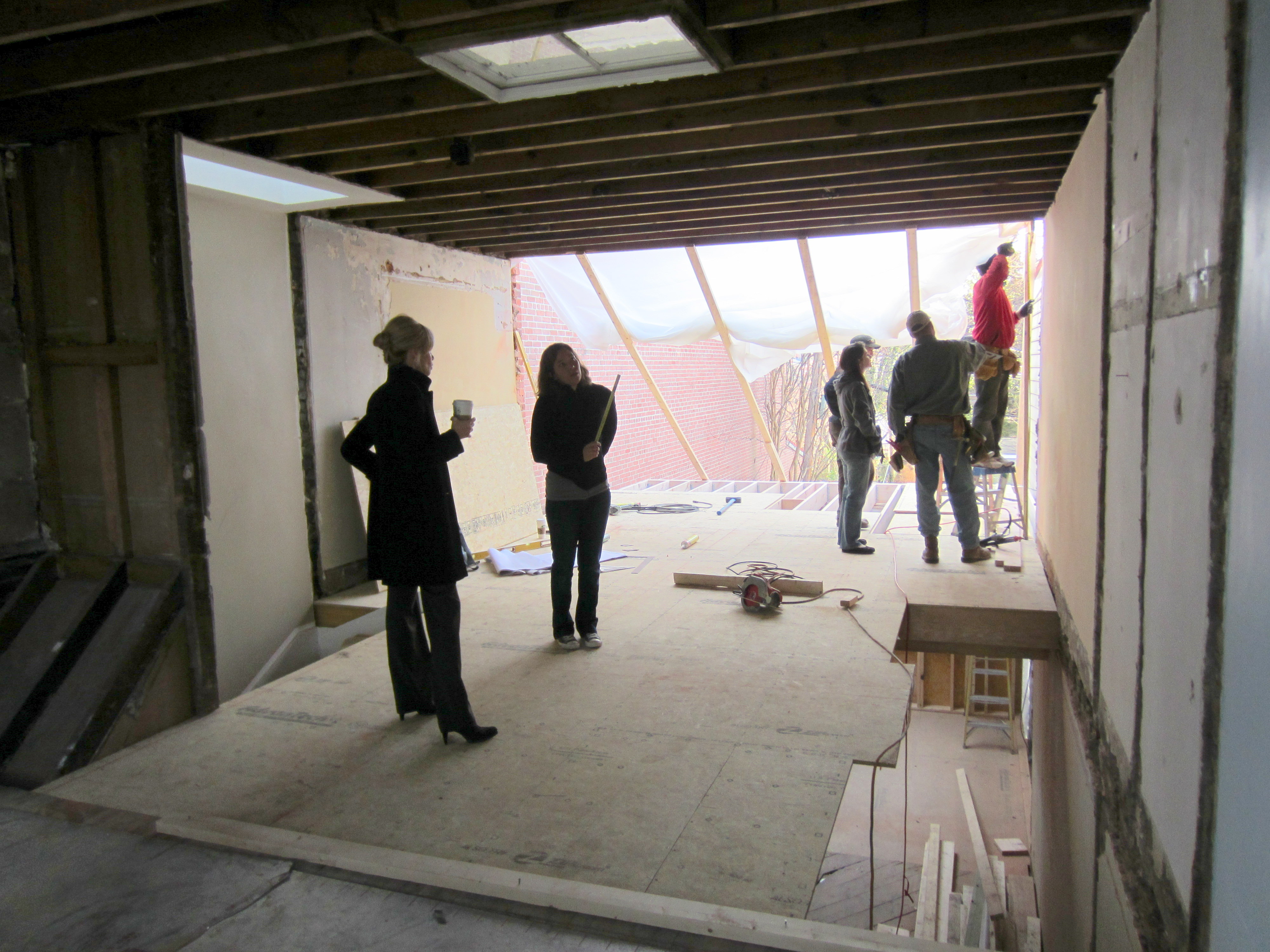
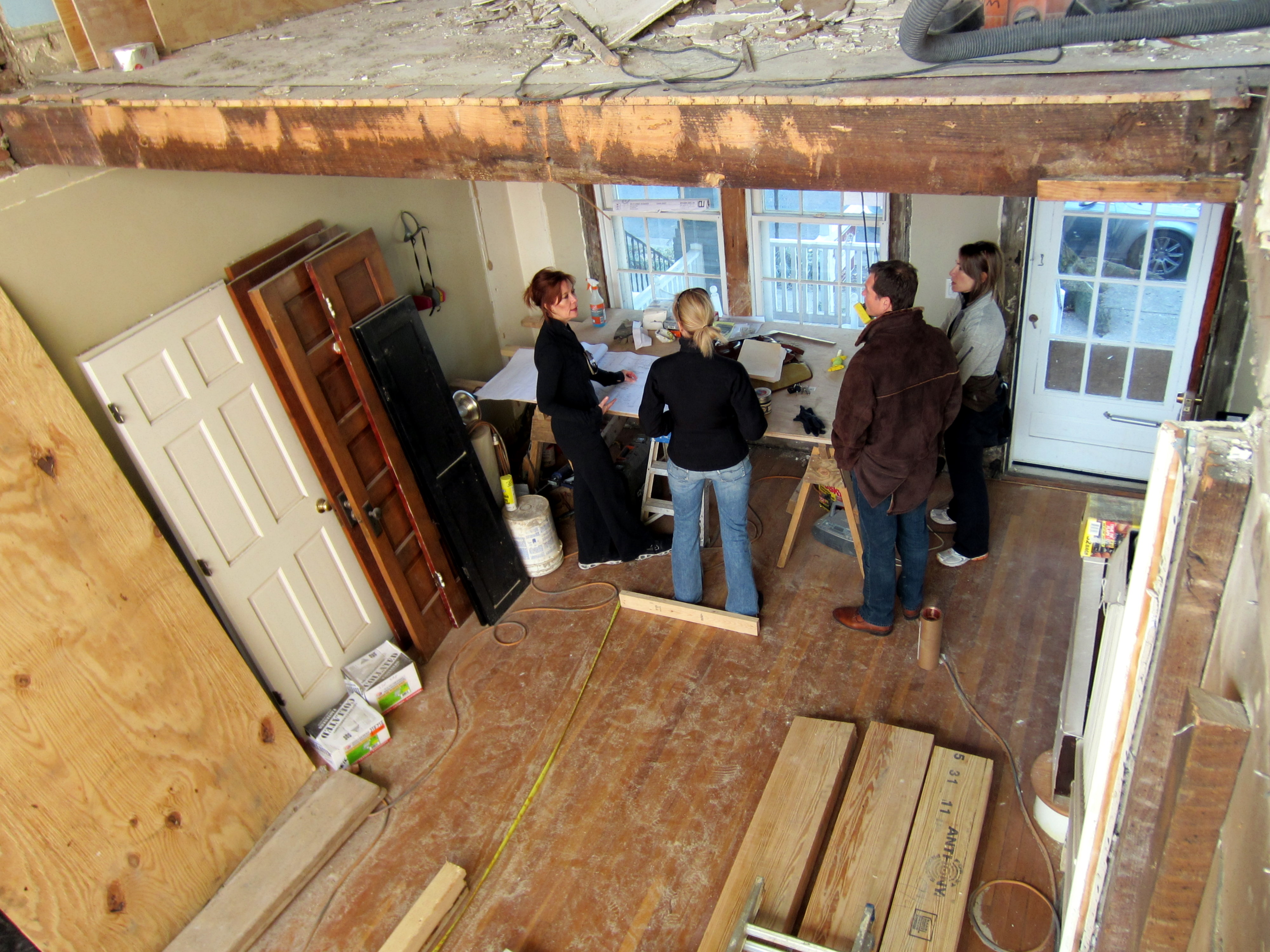
Natalie, Lisa, and Mary discussing a new complication regarding skylight placement in the master bath. (There’s an original rafter beam that was revealed during demo that’s put the kibosh on our original skylight placement plan.)

The offending member (double), holding up a third of the roof’s rafters:

Yup, the skylight’s up there:

A few of the ongoing framing activities on the second floor.

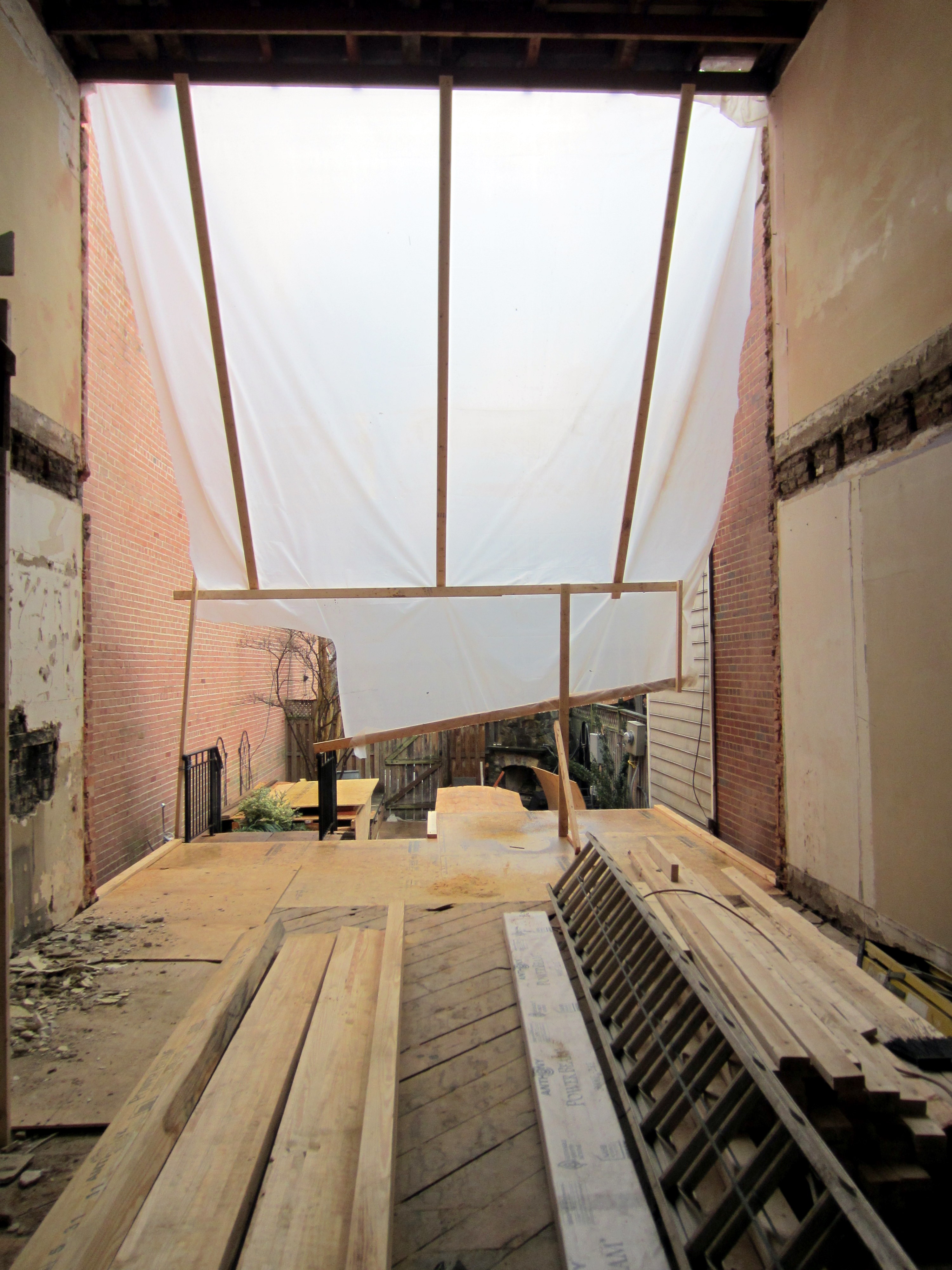
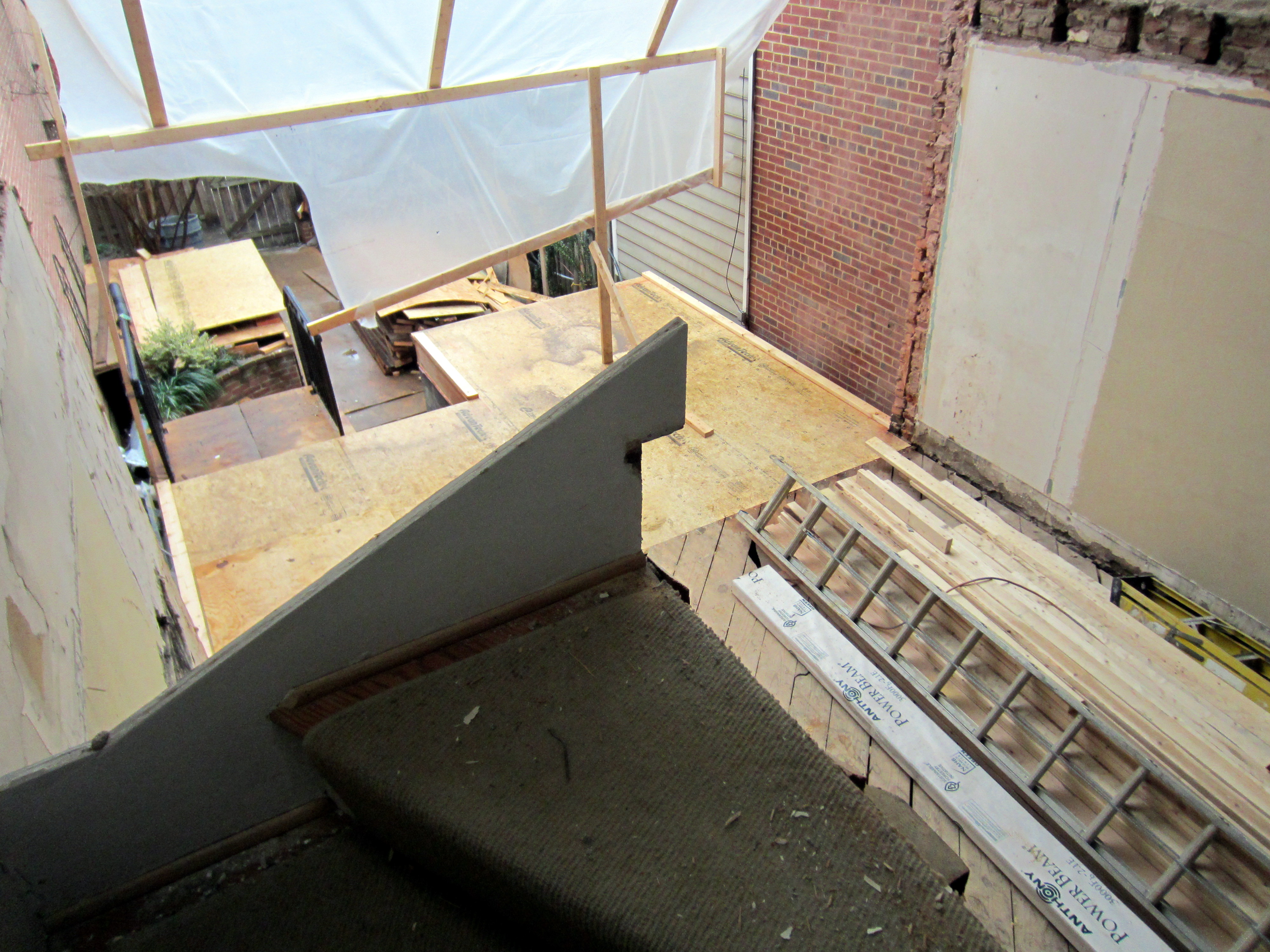
View to the north of the completed bulkhead framing; new, north-south oriented, second-floor joists; and subfloor.


Indecent Exposure

One of the things we were curious about before the demo was whether we had decent-enough looking brick walls under the plaster to expose one completely in the renovated house. Many of the restaurants around town have done the exact same thing (including both of the best pizza places – RedRocks and Pizza Paradiso), and it looked awesome. We figured that, if you’re fortunate enough to have an older, brick-walled townhouse in Old Town, we should take advantage of it.

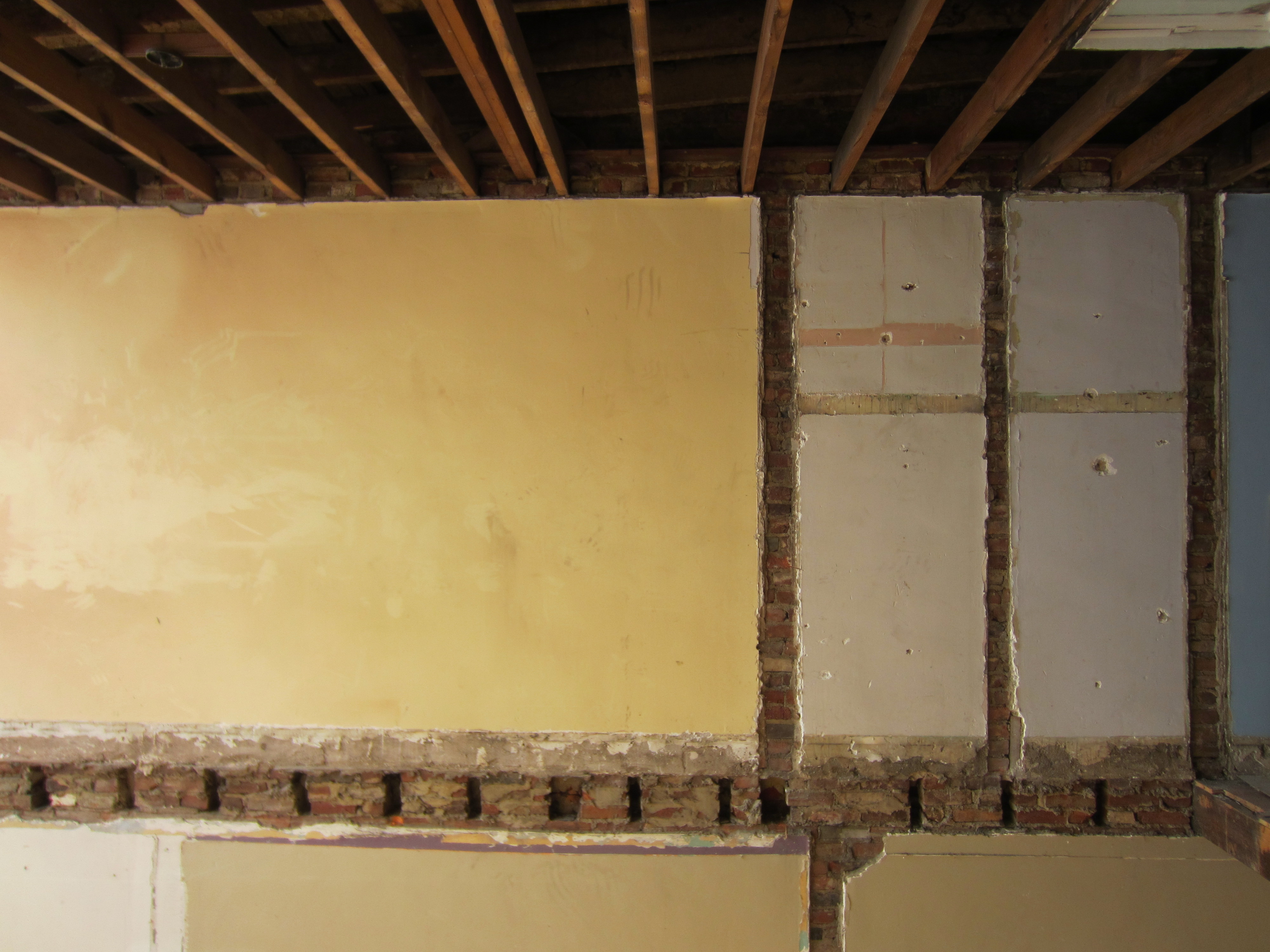
During the demo of the remainder of the main floor (in the “Mr. Gorbachev: Tear Down this Wall!” post: https://wolfestreetproject.com/2012/02/25/mr-gorbachev-t…down-this-wall/), we got a glimpse of the brick underneath the plaster. The picture below is of the area on the west side where the wall between the living room and dining room was attached. Sweet! It looked like our brick would be in good enough shape to expose.

The area we targeted for exposure was the wall of the new powder room on the east side. I asked Dave to see if some of his guys could remove the plaster in this area, and expose the wall, which hopefully would reveal similar conditions to the strip between the plaster on the west wall.

Huh? The bricks didn’t look quite the same.

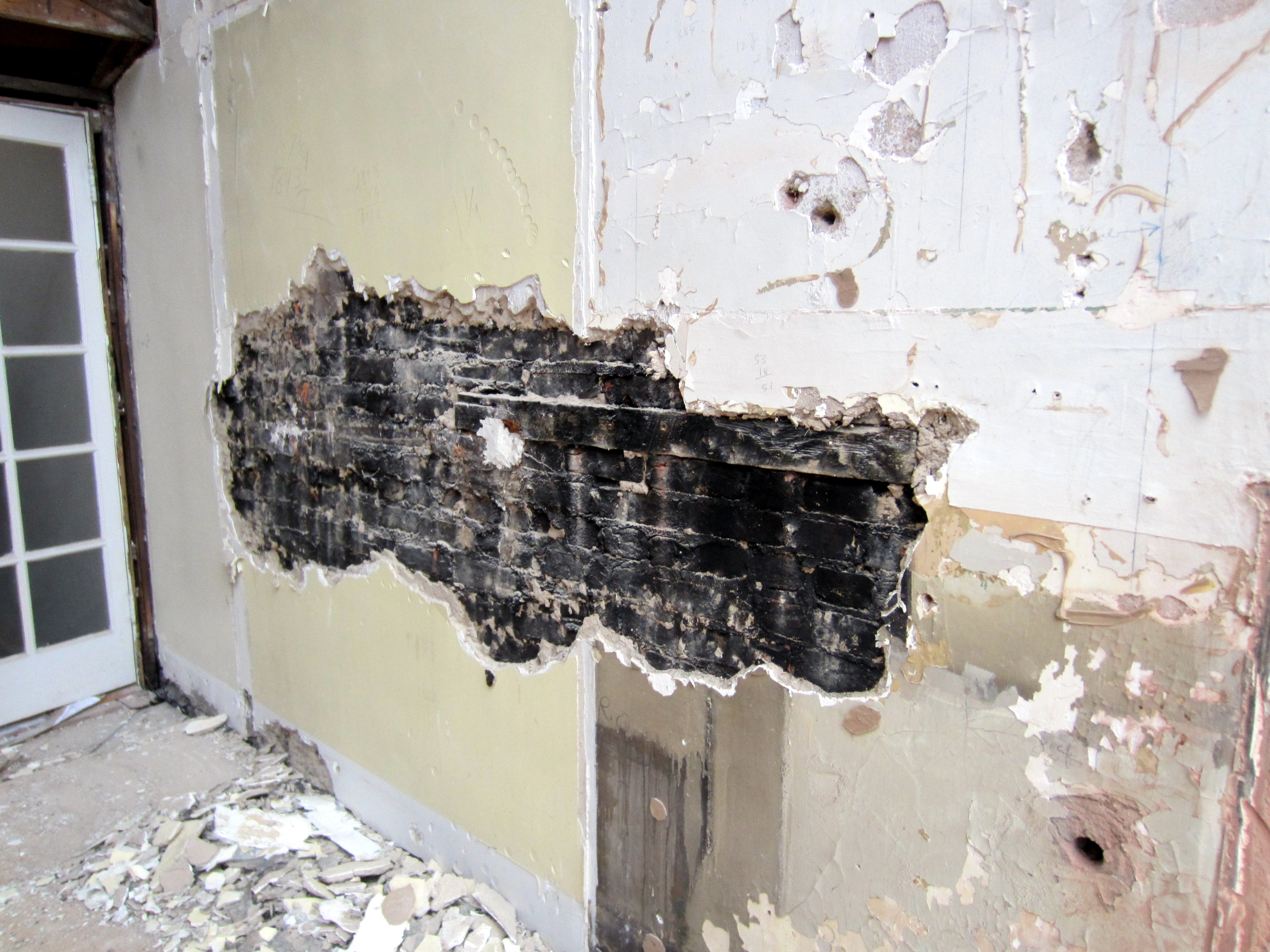
The more the brick wall was exposed, the more we realized that the bricks had been coated with a black substance.

In addition, there’s a big-ass piece of lumber enmeshed with the bricks! (We understand that this was a nailer that had been installed during original construction to allow cabinets or other elements to be nailed in, through the subsequent plaster layer.)

So, here’s the entire wall exposed. It’s entirely coated in this black substance (paint? tar? who knows?). The brick color you see is simply dust from two new holes that were cut in the brick to support new structural members (which will be the subject of the next post). You can see the wood nailer clearly about mid-way down, to the right of the blob of white plaster.

One of the carpenters believes that the black coating was applied to help the plaster adhere to the bricks. This makes sense, since we’ve found it under the areas where plaster was applied, but it’s not on the bricks where there was never any plaster (see the first photo above, as well as the pictures of the wall behind the old bathroom in the last two posts on removal of the joists and removal of the bathroom). In all of the instances where an interior wall abutted a brick wall directly, the brick is natural; wherever plaster was applied, the brick is black.

We’re going to have the area above scrubbed with a wire brush to see if we can salvage the brick and the design idea, and are moderately hopeful, but not confident. If you see a fresh plaster wall in the powder room in the finished house, you’ll know the outcome .  . .

 
3 Comments

Posted by on March 4, 2012 in Framing, Drywall, Plaster, and Brick


The Pinnacle of Destruction: It’s All Uphill from Here

For the past 2 weeks, the focus of renovation activities has been destruction, rather than construction. These activities reached terminal velocity on Thursday, February 23, with the removal of most of the joists supporting the second floor. The result, as you’ll see below, is a complete transition of a house (that was, frankly, pretty nice), to an empty hull. In the words of one of our young nieces commenting on the blog, “the house looked so sweet before and now it is a catastrophe!”

The photo below is during the penultimate step of demo. It’s a view from what used to be the dining room, through what used to be the master bedroom floor, to the exposed rafters. The skylight to the left is above the stairs, and will remain (although it’s not original to the house, like the one in the center, above the old bathroom).

Dave, the site manager, consulting with Mary, the project manager, at what remains of the second floor. We intended for the original railing to remain, but you’ll see what happened to that in a few pics. (Note the stained wood newel post barely visible to the right of the of the white railings . . .).

And then, in the words of Gracie – a catastrophe! No more floor. No more joists. No more much of anything – we’ve reached the peak of the demo activities with the photos below.

Because of the age of the house, the walls are solid brick, so the joists slotted into the holes shown here. Although the joists were all sound, they needed to be removed and replaced with ones that ran north/south (between the front and back), rather than east/west to accommodate the new mechanical and plumbing design for the open floor plan on the first floor.

Looking down from the top of the staircase to nowhere after the catastrophe.

The extent of the joist and framing removal between the first and second floors.

This is a view from the first floor of the remains of the linen closet on the second (the entry to which was through the world’s narrowest 5-panel door, which is the only door we’re retaining and refurbishing, since it’s so cool).

The stairs and railing on the first floor will be retained as one of the only original elements of the old house, so it’s being protected.

The small upstairs hallway and railing before renovation:

Here’s what’s left of the upstairs railing – just the old newel post as a lone sentinel watching over the destruction.

Evidence of earlier renovations. A few years ago, we installed recessed lighting in the living room – these are the electrician’s holes through all of the joists from the front of the house to the dining room to run electrical.

Dave, Ben (our first architect), and Natalie (our new architect) reconsider the joist height spec’d for the second floor.

A view all the way from the first floor to the exposed rafters and old skylight hanging forlornly from the second floor ceiling.

The hulk of a house – view from the front:

And, view from the back:

The stairs to nowhere:

Lisa checks out the new view.

Some friends came over to check out the house-that-is-no-more and debate space utilization on the future first floor.

Someone had commented at the house that the remainder of the upstairs landing looked like a scene from Romeo and Juliet. Definitely an apt comparison (and Phyllis makes a fine Juliet).

Very surreal view through the gutted house from the street:

A quick video from within the empty hull of our house is here:

 
3 Comments

Posted by on February 28, 2012 in Interior Demolition


Bathroom? We Don’t Need No Steenking Bathroom!

The next area to demo was the framing on the second floor, including the bathroom on this floor. This is a “before” view of the small hallway at the top of the stairs, facing north (toward the front of the house). The door on the right (which may be the narrowest 5-panel wood door in existence) is the linen closet; the door in the middle leads to the guest room; the door on the left leads to the upstairs bath.

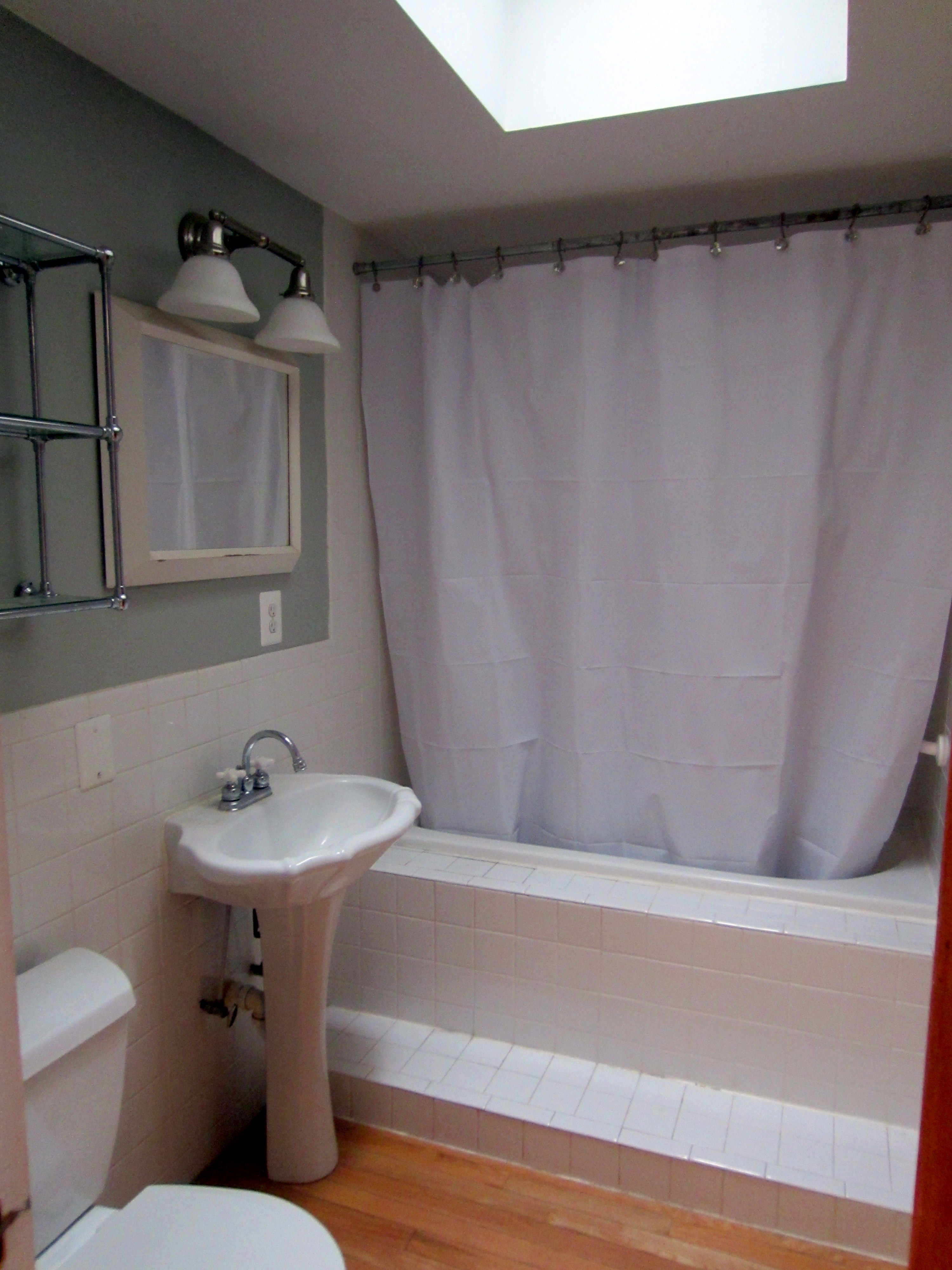
This is the bathroom before demo. One of the best features (the only good feature?) is the original skylight with bead board walls. This is one of the features we fell in love with when we bought the house in 2000.

Here’s the bathroom during demo. The radiator from the master bedroom is on the left – pretty much the only remaining element at this point.

The framing at back (but in the middle) is the old closet from the guest room (which was occupied by vents and the mechanical elements of the old Jacuzzi tub).

Faux closet door on the guest room side.

Looking through the closet door during demo, through the master bedroom, to the back of the house.

View to the back from the bathroom.

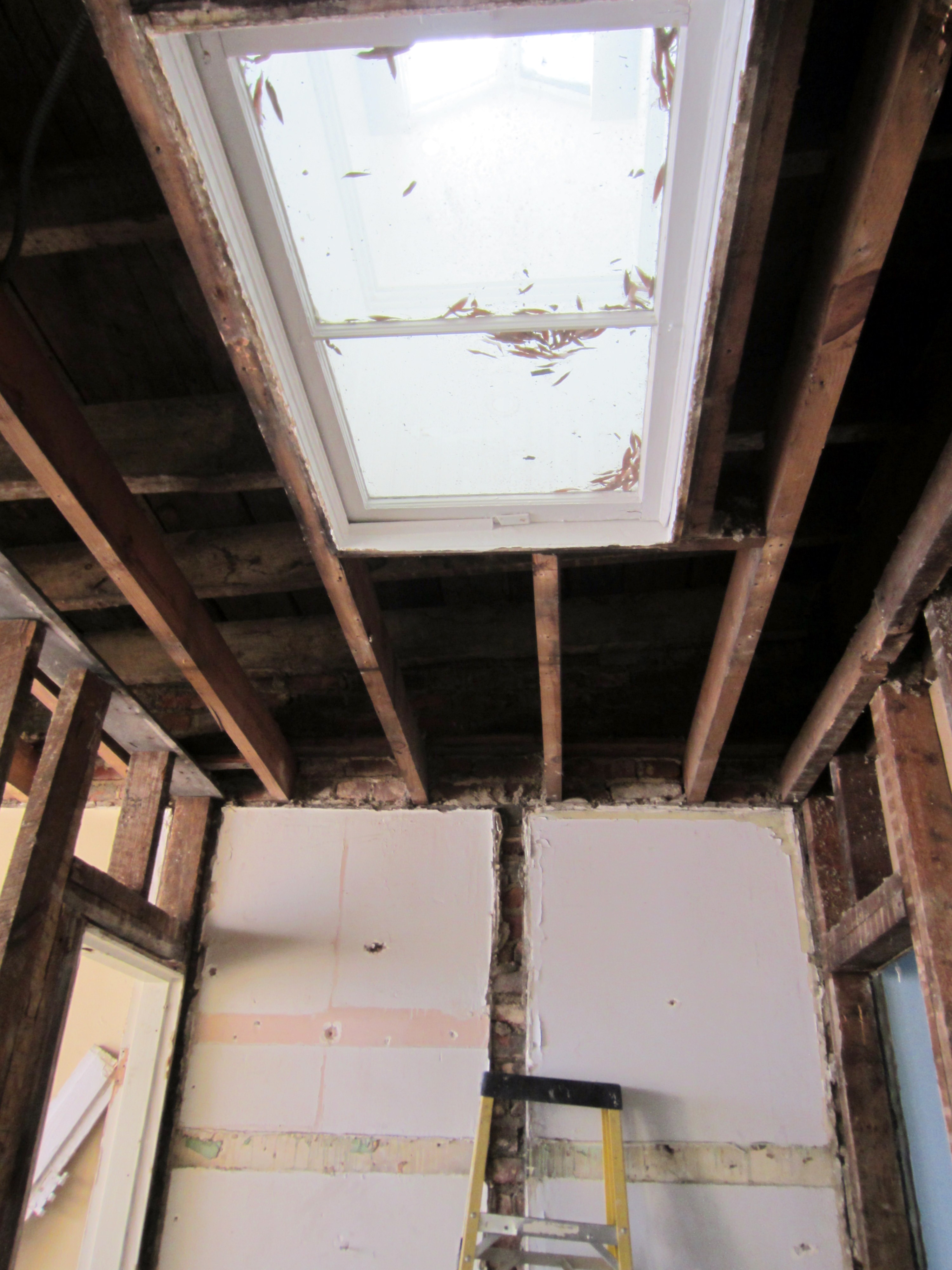
So – a better view of the skylight. The great thing about our beloved bathroom skylight? There are open vents at the top for ventilation, and a glass window on a swivel in the ceiling that can be open and closed. The annoying thing? There are open vents at the top for ventilation and a window on a swivel in the ceiling that can accumulate all of the pain-in-the-ass willow oak leaves from Wolfe Street. Every so often in the fall, we’ll swivel the window to release the leaves, and it would be like sitting under a tree in autumn during a wind storm.

We are definitely retaining the skylight, but will be repairing the superstructure above the roof, and, in the process, making some adjustments to keep out the leaves.

Original closet door frame to guest room on north wall of bathroom.

When the house was built, the second-floor bathroom was narrower, and the west wall ended before the brick party wall, leaving room for abutting closets for the two bedrooms. Over the decades, the closet space was usurped by the bathroom, but vestigial elements remain. In addition to the old closet door frames, this included the plaster patterns on the brick wall to the west – the bare brick between the plaster was where the interior closet walls were.

Exposed joists on the second floor. This used to be the first two thirds of the master bedroom (the rest of the bedroom floor dropped off the face of the earth with the demolition of the old sleeping porch).

 
Leave a comment

Posted by on February 26, 2012 in Interior Demolition


Mr. Gorbachev: Tear Down this Wall!

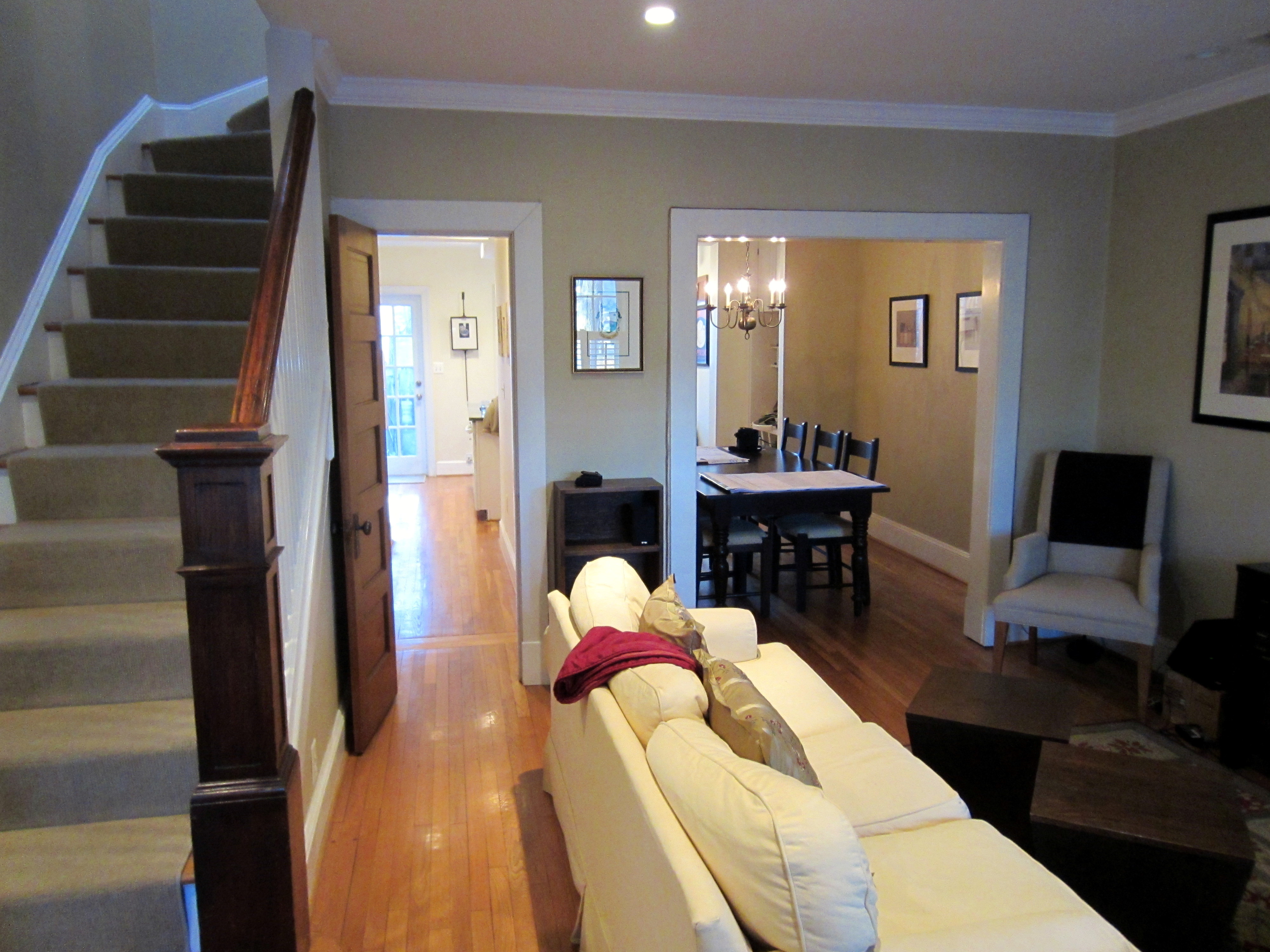
This past week, the main floor of the house got demo’d. Definitely the most traumatic part of the renovation. We actually loved the main floor of the house, including all of the original elements, like the staircase, trim, and doors from the ’20’s. Unfortunately, the space didn’t work for us – particularly the allocation of square footage to a dining room we didn’t use, at the expense of space in the living room, which we do.

Posted below are before and after shots of the demo’d main floor. As significant as these changes were, wait ’til you see the final demo step in the next post this weekend!

The exposed  brick strip is where the wall between the living room and dining room was located. (Our future keg-bearing refrigerator still stands as a lone sentinel to the left.)

 
2 Comments

Posted by on February 25, 2012 in Interior Demolition


It’s the End of the Rear as We Know It . . .
After the old sleeping porch / rear half of master bedroom was removed, the guys moved on to demo the old porch / kitchen. Here, you can see the old, sloped porch floor on which sleepers had been installed to support the subfloor (which a friend put in) and oak flooring, which we installed shortly after we moved in, and tied it to the original oak floors in the rest of the main floor. When we bought the house, the floor in this area was crappy yellow pine running perpendicular to the oak flooring on the rest of the floor, and with a distinct slope to the rear of the house.

Viewing the demolition from the old master bedroom.

At this stage, the entire old porch, including joists, have been removed. New joists that run the entire width of the house will be installed before framing.

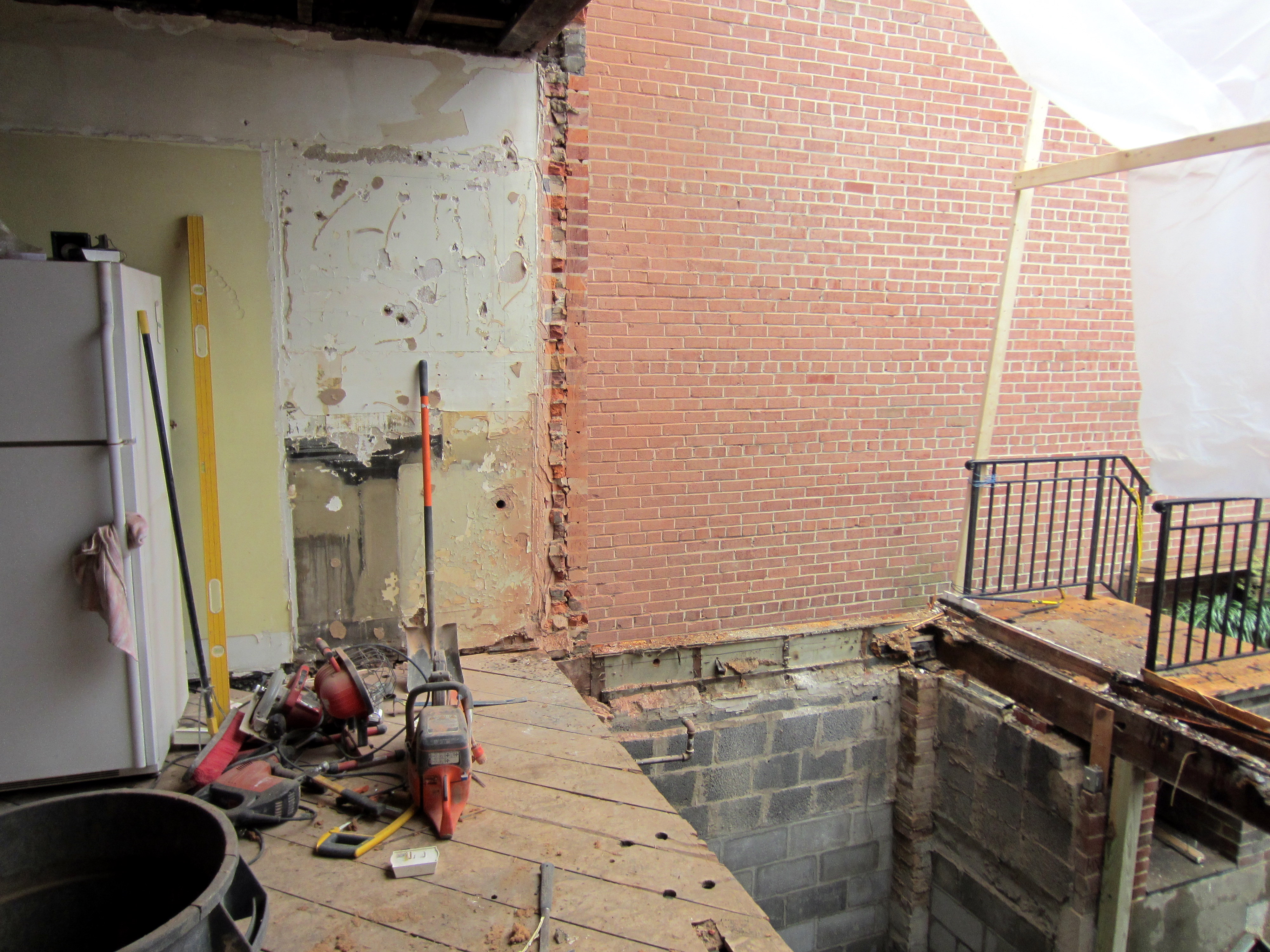
This used to be our kitchen and powder room. The kitchen door to the backyard was, quite obviously, between the two stair railings to the right.

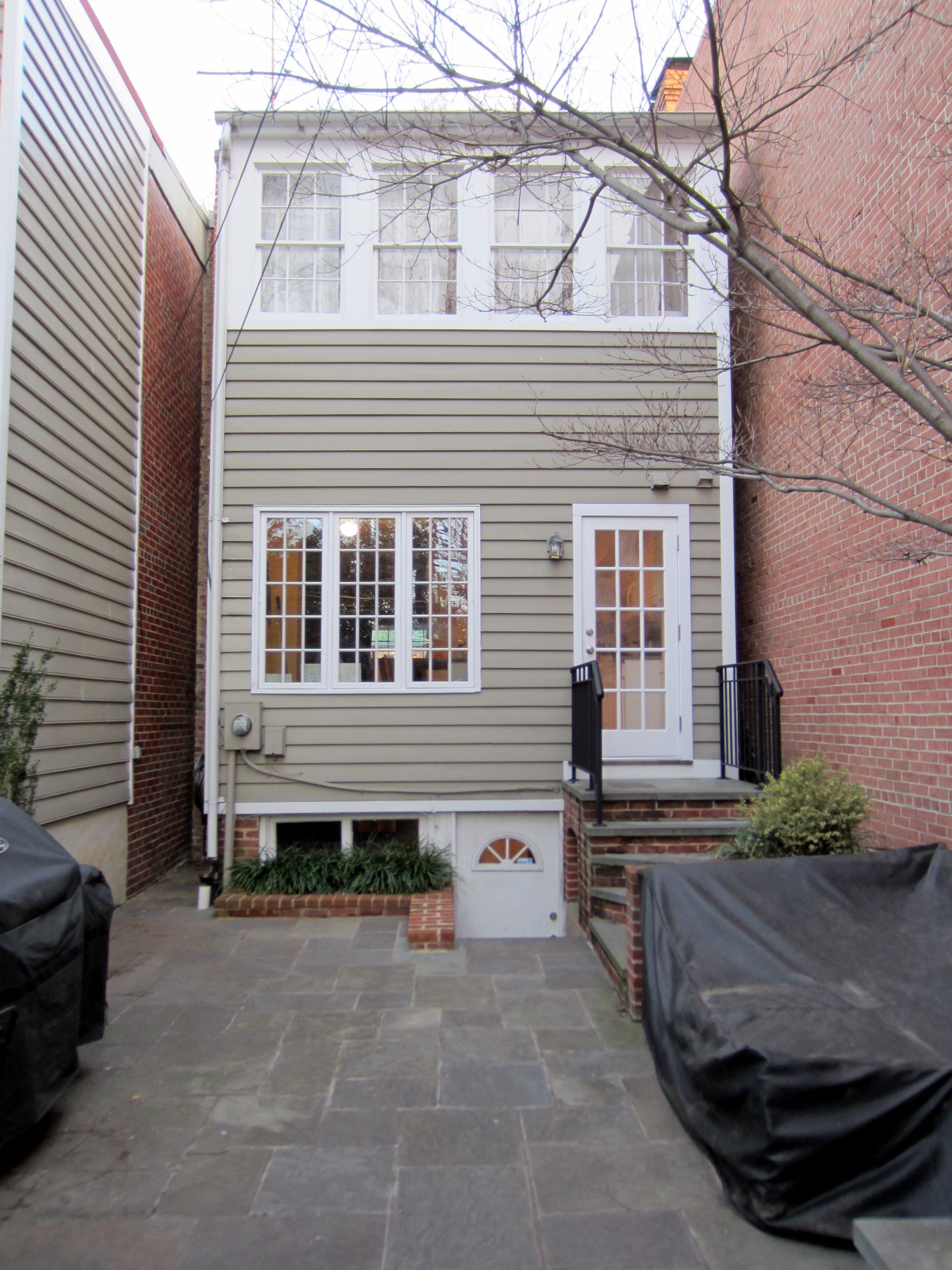
This was the rear of the house at the end of January.

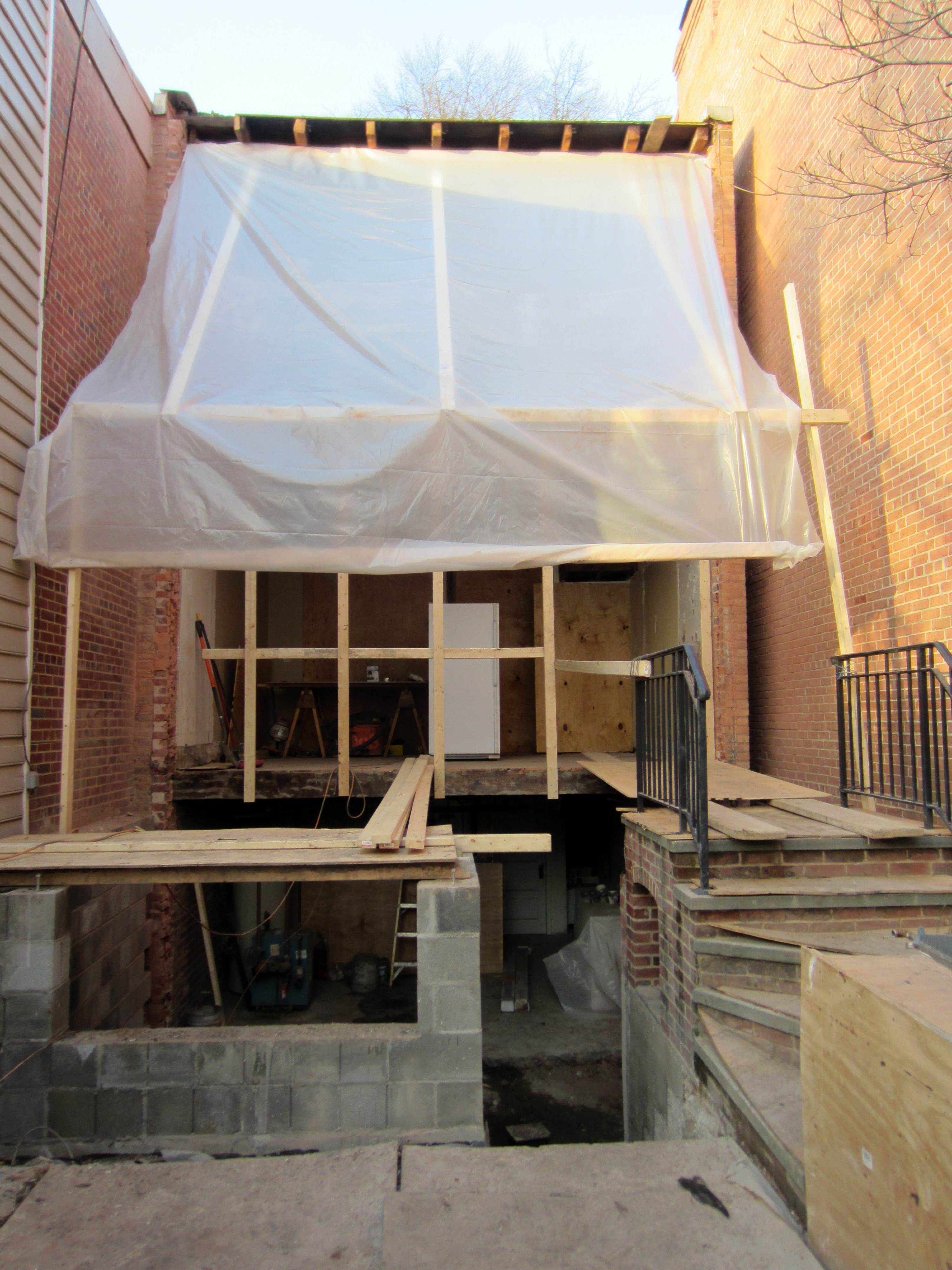
The rear of the house at the completion of this phase of demolition. Although none of the lights or recepticals in the house work, our orphaned refrigerator is still running, plugged into a temporary, waterproof electrical panel that replaced the one that was hanging just inside the basement door (and that would have been exposed at this point if it were left there). The refrigerator ultimately will migrate to the basement, answering a higher call than chilling food. This baby will hold kegs for a tap that will be installed in the kitchen wet bar.

 
3 Comments

Posted by on February 20, 2012 in Interior Demolition


Taking Off Our Top

Below is the master bedroom before complete demolition. For the past 87 years, the sleeping porch on the top floor and the porch on the main floor have been attached to – but not really a part of – the brick structure of the main house. Although we and many of our neighbors have successfully integrated these structures into the house, there have been drawbacks, including poor (or nonexistent) insulation, inconsistent structural construct, and, most importantly, inconsistent dimensions. Namely, the west side of the porches (right side of house looking this direction) did not extend entirely to the wall on the other side.

Truncated original back wall of house. Originally, this brick wall extended completely from east to west. However, a few owners ago, the wall was knocked out on the first and second floors, to only this vestigial section (there’s a smaller version on the opposite side).

This slot separated the house proper from the porches. For the past 20 years or so, this slot was occupied by an 8″ – 10″ strip of the original brick rear wall, sandwiched between the floors and joists (and generally unsupported, other than by some patched-up wood beams, hidden by drywall.

Master bedroom / old sleeping porch roof and windows removed.

Looking back into the old master bedroom.

The chimney for our boiler is now starting to be demo’d while the other sections enter oblivion, as well.

Demo is done – our top is off.

Looking down from what remains from the master bedroom to the first floor and basement.

Exterior of the house during the top floor demo. The modern clapboard siding also has been removed, revealing the awesome, faux-brick asphalt shingling that used to clad the house. Sweet! Maybe we should do a retro look for the renovated house.

 
1 Comment

Posted by on February 19, 2012 in Interior Demolition


Original Sleeping Porch Exposed

So, on February 9 and 10, the guys ripped apart the master bedroom. In the process, the original 1925 sleeping porch on the second floor was revealed. There were a few other surprises, as well.

The master bedroom before demolition is below. The rear of the original brick house is defined by the dropped area to the left of the built-in bookcase. The owner a couple of decades ago had the brick wall between the bedroom and original sleeping porch demolished to create one, larger room.

During demolition:

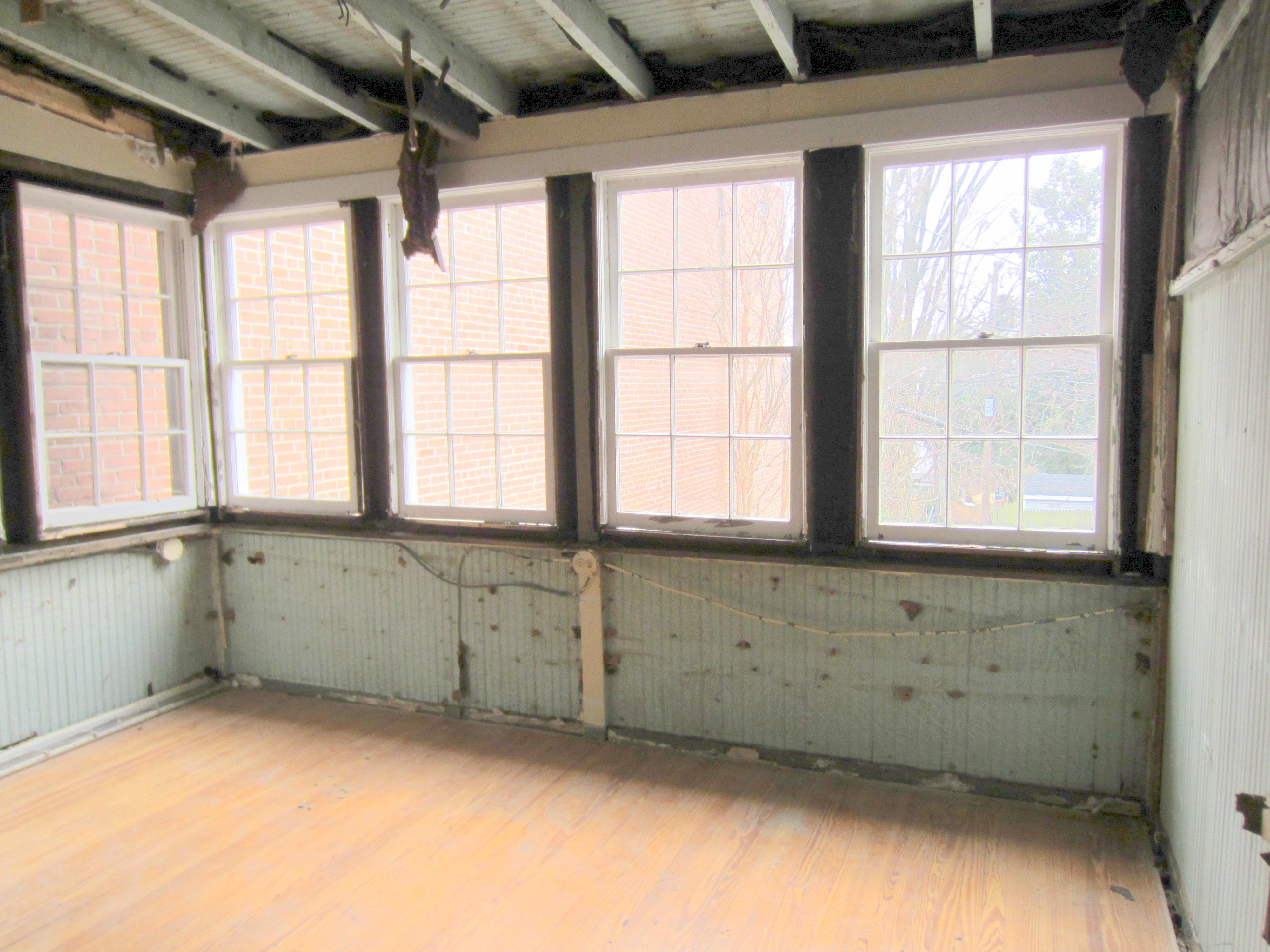
And after. This is the original sleeping porch, with wainscoting walls (in a slightly vomitous sea foam green color).

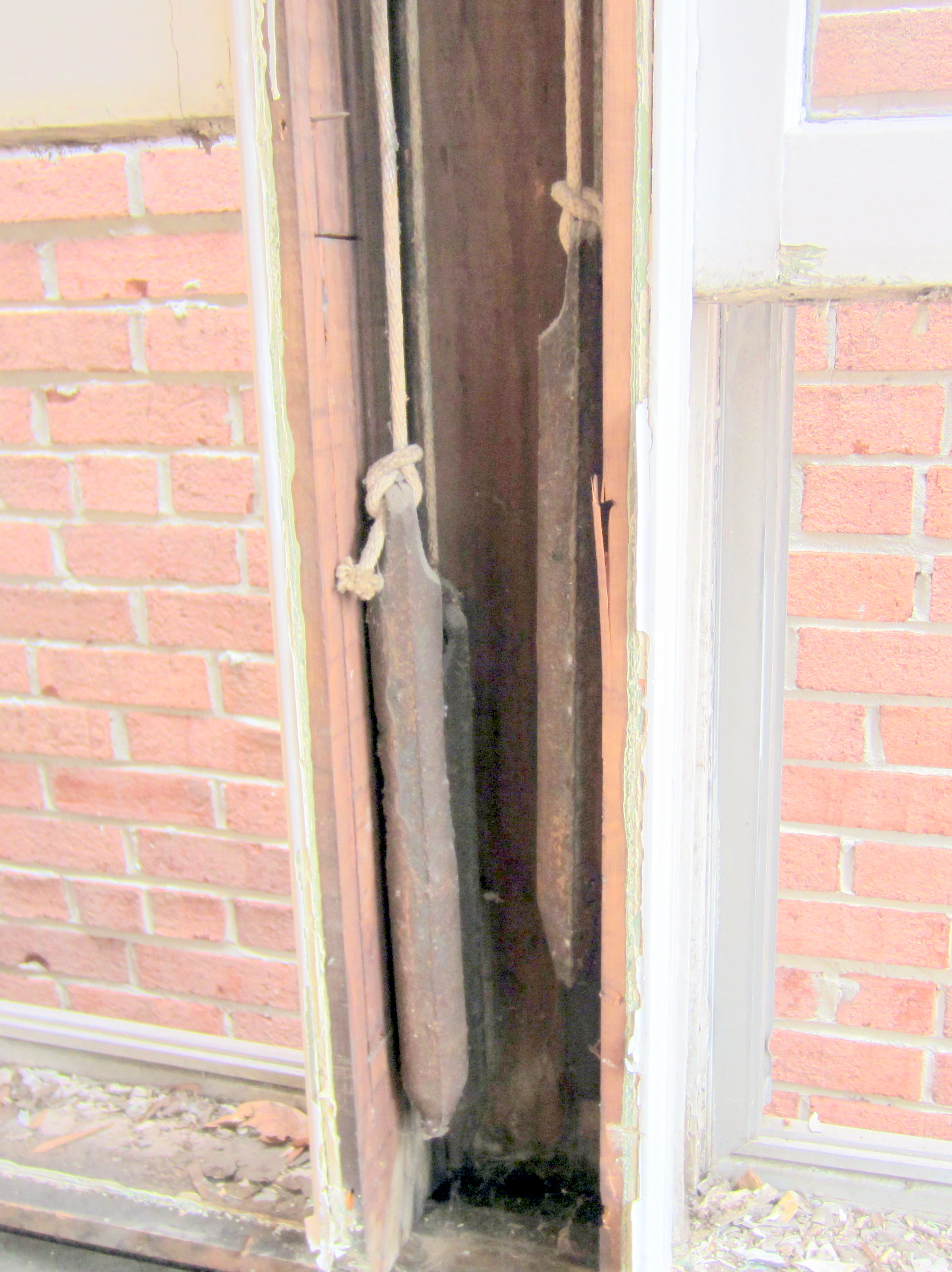
The windows are original, and still have their weight-and-pulley systems intact:

Here’s a closeup of the weights. Although the back windows will be replaced, the original front windows with the same system will be kept and refurbished.

West side of the original sleeping porch, with a higher wainscoting wall, for some reason (perhaps because this side abutted a neighbor [with an identical house], while the other side did not).

The demolition also revealed a trap door to the roof. This had been completely drywalled over. We suspected it was there, since one of our neighbors has one, but didn’t know for sure until now.

North side of the bedroom before demolition:

And after. In addition to the ceiling, the walls for the air handler closet and clothes closet have been removed.

In addition to drywalling over the trap door to the ceiling, the original closet door for this room also had been drywalled over. The demolition revealed the original casing. There’s an identical closet door in the guest bedroom to the north, but there, the door remains.

 
2 Comments

Posted by on February 12, 2012 in Interior Demolition